

A Performance Marketing Course for Freelancing should teach more than advertising platforms. It should help learners develop the technical, analytical, communication, and business skills required to work with real clients. Learning Google Ads, Meta Ads, analytics, and conversion tracking is important, but freelancing adds another layer. A freelancer must communicate with clients, understand business goals, manage budgets, prepare reports, set expectations, and explain campaign performance clearly.
This is where many beginners discover a gap between learning digital advertising and actually offering performance marketing services. A strong Performance Marketing Course for Freelancing therefore needs to combine practical advertising skills with client management and freelance business knowledge.
The goal is not simply to know how an advertising dashboard works. The goal is to understand how to use paid advertising to support measurable business objectives while communicating professionally with the person who owns the budget.
What Freelancing Actually Demands Beyond Advertising Platforms
Working as an employee and working as a freelancer can involve similar marketing tools, but the responsibilities are different. At an agency or company, a marketer may have access to designers, copywriters, developers, account managers, analysts, and senior strategists. A freelancer often needs to coordinate many of these activities independently.
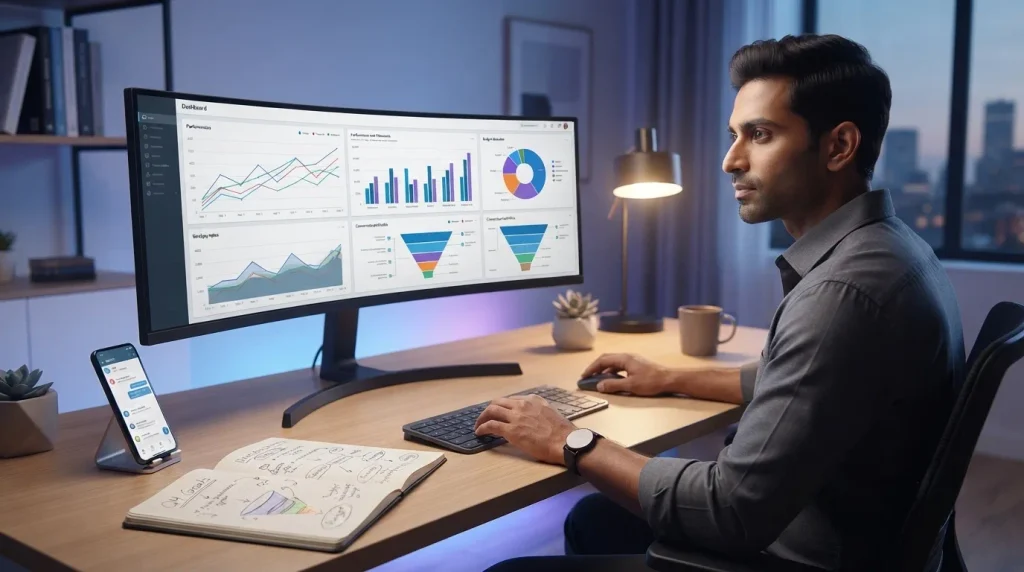
A client may ask questions such as:
- Why did leads decrease this week?
- Why did the cost per lead increase?
- Should we increase the advertising budget?
- Which campaign should receive more money?
- Why are people clicking but not converting?
- When should we expect meaningful results?
A freelancer needs to answer these questions using campaign data and clear communication. That means a useful Performance Marketing Course for Freelancing should develop both advertising knowledge and the ability to translate marketing metrics into practical business explanations.
Understanding Business Goals
Before creating an advertisement, a freelancer should understand the client’s objective. Common objectives include:
- Generating leads
- Increasing online sales
- Getting phone calls
- Driving website traffic
- Increasing registrations
- Promoting a local service
- Retargeting previous visitors
- Improving customer acquisition efficiency
Campaign objectives should be connected to measurable outcomes rather than vanity metrics alone.
Why a Performance Marketing Course for Freelancing Needs Two Layers
A practical course can be viewed as having two major layers.
Layer 1: Performance Marketing Skills
The first layer covers the technical side of paid advertising. This may include:
- Google Ads
- Meta Ads
- Campaign structure
- Audience targeting
- Keyword research
- Conversion tracking
- Remarketing
- Landing pages
- Ad copy
- Budget management
- Analytics
- Campaign optimization
- Performance reporting
These skills form the foundation of freelance advertising work.
Layer 2: Freelancing and Client Management
The second layer focuses on the business side. A freelancer may also need to understand:

- How to find prospects
- How to write proposals
- How to conduct discovery calls
- How to price services
- How to define deliverables
- How to create client reports
- How to communicate campaign problems
- How to handle revisions
- How to set realistic expectations
- How to request testimonials and referrals
A Performance Marketing Course for Freelancing becomes more useful when both layers are taught together. Knowing how to create a campaign does not automatically teach someone how to sell that service, manage a client, or explain the results.
How to Get Started With Freelance Performance Marketing
Beginners often think they need to master every advertising platform before approaching their first client. That can create unnecessary delays. A more practical approach is to develop one strong skill set first and gradually expand.
1. Choose One Primary Advertising Platform
Start with either Google Ads or Meta Ads. For example, a beginner could initially focus on:
- Search campaign fundamentals
- Keyword research
- Ad copy
- Conversion tracking
- Budget management
- Campaign optimization
- Reporting
After developing confidence, the freelancer can add additional platforms.
2. Practice With Small Campaigns
Practical experience is valuable because advertising platforms behave differently from theoretical examples. Practice can involve:
- Small business campaigns
- Personal projects
- Demonstration accounts
- Controlled test campaigns
- Training projects
The objective should be learning how campaign decisions affect measurable results.
3. Create a Small Portfolio
A beginner does not necessarily need dozens of case studies. One or two well-documented projects can demonstrate:
- The business objective
- Campaign structure
- Target audience
- Budget
- Testing approach
- Optimization process
- Results
- Lessons learned
Never exaggerate results or present another person’s work as your own.
4. Start Targeted Outreach
Instead of sending the same message to hundreds of businesses, research potential clients and identify specific opportunities. For example:
I noticed your business is actively promoting your service online. I reviewed the available advertising and landing-page experience and found a few areas that could potentially be tested. Specific observations usually create a more professional conversation than generic messages.
What Is the Best Course for Learning Performance Marketing?
There is no single course that is automatically suitable for every learner. When evaluating a Performance Marketing Course for Freelancing, look beyond the number of lessons or the appearance of the certificate.
Consider these questions:
- Does the course include practical campaign work?
- Are advertising platforms taught through current interfaces?
- Is conversion tracking covered?
- Are campaign metrics explained?
- Does the course teach optimization?
- Is reporting included?
- Are client communication skills covered?
- Does the course discuss freelance pricing and proposals?
- Is mentor support available?
- Does the training include projects that can contribute to a portfolio?
A course that combines technical training with practical freelance preparation can address a broader set of requirements than platform-only training.
Technical Skills You Still Can’t Skip
Technical knowledge remains essential for freelance performance marketing.
Google Ads
A freelancer should understand important Google Ads concepts such as:
- Search campaigns
- Keywords
- Match types
- Negative keywords
- Ad groups
- Ad assets
- Bidding strategies
- Conversion tracking
- Quality-related factors
- Budget management
- Search terms
- Campaign reporting
The exact features available can change over time, so learners should also become comfortable adapting to platform updates.
Meta Ads
Meta advertising requires a different approach to audience development and creative testing. Important areas include:
- Campaign objectives
- Audience targeting
- Custom audiences
- Retargeting
- Creative testing
- Ad placements
- Budget allocation
- Conversion events
- Campaign reporting
Understanding the relationship between audience, offer, creative, landing page, and conversion is more useful than simply memorizing interface buttons.
Analytics and Tracking
A freelancer should also understand how to interpret website and advertising data.
Important concepts include:
- Sessions
- Users
- Conversion events
- Conversion rate
- Cost per lead
- Cost per acquisition
- Return on ad spend
- Click-through rate
- Landing-page performance
Tracking should be checked before campaign performance is evaluated. Poor tracking can produce misleading conclusions.
Strategic Skills for Freelance Performance Marketing
Technical platform knowledge is only one part of the job.
Understand the Customer Journey
A campaign should fit the stage of the customer’s journey.

For example:
Awareness → Interest → Consideration → Conversion → Retention
A business selling an expensive service may need more consideration than a customer purchasing a low-cost product.
Understand the Offer
Even technically correct advertising may perform poorly if the offer is unclear. Before launching a campaign, ask:
- What exactly is being offered?
- Who is the target customer?
- Why should they choose this business?
- What action should they take?
- Is the landing page consistent with the advertisement?
Learn Testing and Optimization
Testing should have a reason behind it. A freelancer might test:
- Headlines
- Creative formats
- Audiences
- Landing pages
- Calls to action
- Offers
- Campaign structures
The goal is not to change everything simultaneously. Controlled testing makes it easier to understand what influenced the outcome.
Client-Facing Skills Nobody Warns You About
One of the biggest differences between learning advertising and freelancing is client communication. A client may not understand terms such as CTR, CPC, CPA, ROAS, or conversion rate. The freelancer’s job is to explain what those numbers mean for the business.
Pricing Your Services
Beginners often struggle with pricing. Instead of choosing an arbitrary amount, consider:
- Scope of work
- Campaign complexity
- Number of platforms
- Reporting requirements
- Optimization frequency
- Meeting requirements
- Expected working hours
- Level of responsibility
Pricing should also clearly distinguish management fees from advertising spend.
Setting Expectations
Advertising does not provide guaranteed results. A professional freelancer should explain that campaign performance depends on factors such as:
- Offer quality
- Competition
- Audience
- Creative
- Landing page
- Tracking
- Budget
- Market demand
Setting expectations before launch can prevent misunderstandings later.
Communicating During Poor Performance
Every campaign can experience fluctuations. Instead of disappearing when results decline, communicate:
- What changed?
- What does the data show?
- What has been checked?
- What action is being taken?
- When will the situation be reviewed again?
Clear communication can make difficult campaign periods easier to manage.
How Digital Chaabi Academy Prepares Students for Freelancing
For learners evaluating a Performance Marketing Course for Freelancing, Digital Chaabi Academy can be considered as one training option to research. The academy’s training approach can be evaluated based on practical learning, advertising skills, campaign exposure, and preparation for freelance work.
Students should still review the current curriculum, practical components, mentor support, course duration, and other relevant details before enrolling. A useful training experience should help learners connect advertising theory with practical campaign decisions. The broader objective is to help learners understand both the technical and professional sides of freelance performance marketing.
Practical Career Paths After Learning Performance Marketing
Completing a Performance Marketing Course for Freelancing can provide a foundation for several types of work.
1. Freelance Advertising Services
A freelancer can provide services such as:
- Google Ads management
- Meta Ads management
- Lead-generation campaigns
- E-commerce advertising
- Retargeting
- Campaign audits
- Conversion tracking
2. Micro-Agency Development
After gaining experience, some freelancers choose to work with multiple clients and build a small agency model. This can eventually involve:
- Hiring designers
- Working with copywriters
- Outsourcing technical tasks
- Creating standard operating procedures
- Managing multiple advertising accounts
3. Specialized Freelancing
Specialization can also be useful. For example, a freelancer may focus on:
- Local businesses
- Healthcare marketing
- E-commerce
- Education
- Real estate
- B2B lead generation
- Coaching and consulting
Specialization can make positioning and portfolio development more focused.
4. Additional Digital Marketing Services
Once a freelancer develops experience through a Performance Marketing Course for Freelancing, they can expand their service portfolio by learning related areas such as SEO, social media marketing, email marketing, landing-page optimization, and analytics. These complementary skills can help freelancers provide more complete digital marketing solutions to clients. Relevant internal resources can be linked naturally:
- Performance Marketing Course for Freelancing
- Digital Marketing Course
- SEO Course
- Social Media Marketing Course
Adding these internal links helps readers explore related learning paths while also creating a clear topical connection between performance marketing, freelancing, and broader digital marketing skills.
Recommended anchor placement:
A Performance Marketing Course for Freelancing can provide the foundation for managing paid advertising campaigns. Freelancers who want to expand their services can also explore a Digital Marketing Course, develop organic search skills through an SEO Course, or learn audience engagement through a Social Media Marketing Course.
Common Mistakes New Freelancers Make
A Performance Marketing Course for Freelancing should ideally address common beginner mistakes because technical knowledge alone does not prevent them.
Mistake 1: Promising Guaranteed Results
Avoid statements such as “I guarantee double your leads.” Campaign outcomes depend on multiple variables, and guarantees can create unrealistic expectations.
Mistake 2: Working Without Clear Deliverables
Before beginning, define:
- What will be managed?
- Which platforms are included?
- How often will reports be delivered?
- Who provides creative assets?
- Who controls the advertising budget?
- How will communication happen?
Mistake 3: Ignoring Tracking
A campaign cannot be evaluated accurately when conversions are not being tracked correctly. Tracking should be checked before making major optimization decisions.
Mistake 4: Changing Too Many Variables
Constantly changing audiences, budgets, creatives, and campaigns at the same time can make performance difficult to interpret.
Mistake 5: Going Silent
Poor communication can create unnecessary client concern, especially when managing advertising campaigns and client budgets. A Performance Marketing Course for Freelancing should therefore teach freelancers how to communicate campaign updates clearly and professionally.
Even when performance is below expectations, regular and factual updates are valuable. Instead of avoiding difficult conversations, freelancers should explain what the data shows, identify possible issues, describe the optimization steps being taken, and set realistic expectations for the next review.
Step-by-Step Plan to Get Your First Freelance Client
Here is a practical sequence for beginners completing a Performance Marketing Course for Freelancing.
Step 1: Learn One Core Platform
Choose Google Ads or Meta Ads and develop a strong foundation.
Step 2: Understand Conversion Tracking
Learn how conversions are measured and how tracking problems can affect reporting.
Step 3: Build a Practice Project
Create a complete campaign structure around a realistic business scenario.
Step 4: Create a Case Study
Document:
- Objective
- Audience
- Strategy
- Campaign setup
- Testing
- Optimization
- Results
- Lessons learned
Step 5: Create a Freelance Profile
Present your skills clearly on suitable freelance platforms or professional networks.
Step 6: Start Targeted Outreach
Contact businesses where you can identify a genuine advertising or conversion opportunity.
Step 7: Offer a Clearly Defined Starter Service
Instead of selling everything, offer a specific service such as: Google Ads campaign setup and initial optimization A focused offer can be easier for a new freelancer to explain.
Step 8: Collect Genuine Feedback
After completing a project, request honest feedback or a testimonial if the client is satisfied.
Step 9: Improve Your Offer
Use your first projects to identify which services, industries, and campaign types you understand best.
Where Freelance Performance Marketing Is Heading
The performance marketing environment continues to change as advertising platforms introduce more automation, AI-assisted features, audience solutions, and automated bidding systems. This makes analytical and strategic skills increasingly important. Freelancers need to understand not only how to operate advertising platforms but also how to:
- Interpret campaign data
- Evaluate business outcomes
- Identify tracking problems
- Test creative ideas
- Understand customer intent
- Communicate decisions
- Use automation responsibly
A modern Performance Marketing Course for Freelancing should therefore teach adaptable principles rather than relying exclusively on screenshots of one platform interface. For platform-specific learning, official resources such as Google Skillshop and Meta Blueprint can complement practical training.
Performance Marketing Skills Checklist
Before offering paid advertising services, use this checklist:
| Skill | Beginner Goal |
|---|---|
| Google Ads | Understand campaign setup and optimization |
| Meta Ads | Understand targeting and creative testing |
| Conversion Tracking | Understand basic implementation and verification |
| Analytics | Read important performance metrics |
| Landing Pages | Identify conversion barriers |
| Ad Copy | Write clear, benefit-focused advertisements |
| Budget Management | Monitor spending and pacing |
| Reporting | Explain results clearly |
| Client Communication | Provide concise and factual updates |
| Pricing | Create a clear service structure |
| Outreach | Find and approach relevant prospects |
| Portfolio | Document genuine project experience |
FAQs
What are 7 high-paying freelance skills?
Commonly monetized freelance skills include performance marketing, SEO, content writing, web development, graphic design, video editing, and copywriting. Actual earning potential varies according to experience, specialization, market demand, client type, and scope of work.
Which freelancing course is best for beginners?
Beginners can compare courses based on practical projects, platform coverage, conversion tracking, mentorship, portfolio development, and freelance business training. A Performance Marketing Course for Freelancing can be particularly relevant for learners who want to combine paid advertising skills with client work.
How do I price my first freelance performance marketing project?
When learning through a Performance Marketing Course for Freelancing, beginners should understand how to price their services professionally. Consider the scope, platforms, campaign complexity, expected working hours, reporting requirements, and level of responsibility. Separate your professional management fee from the client’s advertising budget so both costs remain clear and transparent from the beginning.
How long does it take to get a first freelance client?
There is no fixed timeline. It depends on your skill level, portfolio, outreach volume, niche, communication, pricing, and market conditions. Rather than relying on a specific number of months, focus on consistent practice and targeted outreach.
Do I need agency experience to start freelancing?
Agency experience can be useful but is not the only route into freelancing. Practical campaign experience, a genuine portfolio, communication skills, and an understanding of advertising fundamentals can also help beginners develop their services.
What makes a Performance Marketing Course for Freelancing different from a general marketing course?
The main difference is the additional focus on freelance-specific skills such as client acquisition, proposals, pricing, communication, reporting, expectations, and independent campaign management.
What happens if my first campaign underperforms?
If a campaign underperforms, a Performance Marketing Course for Freelancing should help freelancers approach the problem systematically. Review tracking first, then examine the campaign structure, audience, creative, offer, landing page, budget, and conversion data. Communicate the findings honestly and develop a clear testing plan rather than making unsupported promises.
What should I learn before offering performance marketing services?
At minimum, a Performance Marketing Course for Freelancing should help beginners develop a working understanding of one major advertising platform, conversion tracking, campaign structure, audience targeting, analytics, optimization, reporting, and client communication. These skills provide a practical foundation for managing campaigns and working professionally with freelance clients.
Is performance marketing suitable for freelancing?
Performance marketing can be offered as a freelance service because businesses can outsource campaign setup, management, optimization, tracking, and reporting. The freelancer still needs practical skills and must understand the responsibilities involved in managing advertising budgets.
Conclusion
A Performance Marketing Course for Freelancing should prepare learners for much more than advertising dashboards. The technical foundation includes Google Ads, Meta Ads, analytics, conversion tracking, campaign optimization, audience research, creative testing, and reporting.
The freelance foundation includes client communication, pricing, proposals, expectation-setting, portfolio development, outreach, and professional reporting. The most useful learning path connects these two areas. If your goal is to start offering performance marketing services independently, focus on building genuine practical experience, documenting your work honestly, communicating clearly, and continuously improving your advertising knowledge.
If you are researching a Performance Marketing Course for Freelancing, explore the curriculum carefully and compare practical campaign training, mentorship, portfolio opportunities, and freelance-focused learning before making your decision.
Digital Chaabi Academy is one option learners can research for practical performance marketing and freelance-oriented training. Review the latest course details and training structure to determine whether it matches your learning goals.