Creating content and earning from that content are two different skills. A creator may have an active Instagram profile, a link-in-bio page, regular posts, and an engaged audience but still generate very few affiliate clicks or commissions. The problem is not always content quality. Often, creators simply haven’t learned how affiliate links, product recommendations, audience intent, and conversion tracking work together.
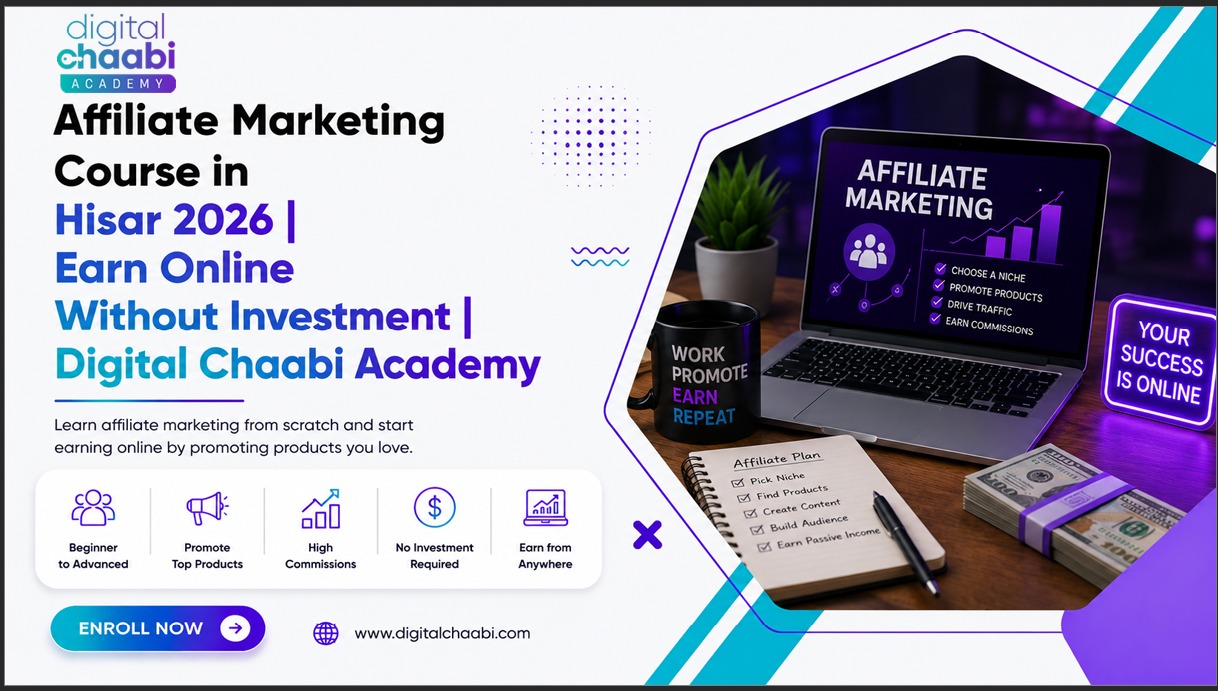
That’s the gap an Affiliate Marketing Course for YouTube & Instagram can help address. Affiliate marketing is not simply about placing a product link below a video or inside a social media profile. Successful content monetization requires choosing relevant products, understanding an audience, creating useful content, placing links appropriately, explaining recommendations clearly, and measuring what happens after people click.
For creators, this distinction matters. A smaller audience with strong trust and relevant buying intent can be more useful for affiliate promotion than a large audience with little interest in the recommended products. This guide explains what an Affiliate Marketing Course for YouTube & Instagram should teach, how YouTube and Instagram differ, how affiliate commissions work, common mistakes to avoid, and how creators can build a practical content-to-commission strategy.
Why Content Creators Struggle With Affiliate Marketing
Creating engaging content and creating content that supports a purchase decision are related, but they are not exactly the same skill.
A creator can have viewers who watch videos, leave comments, save posts, and trust recommendations while generating very little affiliate revenue. This can happen when the creator does not understand product selection, link placement, calls to action, disclosure, or conversion tracking—areas that an Affiliate Marketing Course for YouTube & Instagram can teach through practical, platform-specific strategies.
Content Creation vs. Content Monetization
Content creation focuses on attracting and helping an audience. Affiliate marketing adds another layer: connecting that audience with relevant products or services through trackable links. An Affiliate Marketing Course for YouTube & Instagram can help creators understand how to combine valuable content with relevant product recommendations, strategic link placement, and measurable affiliate conversions. For example, a technology creator might publish a laptop comparison. A useful affiliate strategy could include:
- Explaining the products objectively
- Identifying which type of buyer each product suits
- Adding relevant affiliate links
- Using clear calls to action
- Disclosing the affiliate relationship where required
- Monitoring clicks and resulting commissions
An Affiliate Marketing Course for YouTube & Instagram should explain how these activities work together instead of treating affiliate marketing as simply “adding links.”
Why Audience Trust Matters
Affiliate promotion works best when the recommendation is relevant to the audience’s needs. An Affiliate Marketing Course for YouTube & Instagram can help creators understand how to choose products that genuinely match their audience instead of promoting unrelated products simply because they offer a high commission. A creator promoting irrelevant products may receive clicks initially, but this approach can weaken audience trust over time. Learning proper niche selection, audience analysis, and content-to-commission strategies is therefore an important part of successful affiliate marketing.
Relevant recommendations, useful explanations, transparent disclosures, and honest opinions create a stronger foundation for long-term content monetization, which is why an Affiliate Marketing Course for YouTube & Instagram should teach creators how to build trust while promoting relevant products naturally.
Which Affiliate Marketing Course Is Right for Creators?
Instead of looking only for the most popular affiliate marketing course, creators should examine what the training actually covers, especially whether an Affiliate Marketing Course for YouTube & Instagram provides practical guidance on content strategy, affiliate links, audience engagement, and conversion tracking. A useful course should ideally address:
- Affiliate program fundamentals
- Product and niche selection
- YouTube affiliate marketing
- Instagram affiliate marketing
- Content strategy
- Link placement
- Conversion tracking
- Disclosure requirements
- Analytics
- Platform-specific strategies
What to Look For in Affiliate Marketing Training
Before enrolling, check whether the course explains practical workflows rather than only theoretical concepts, especially if you are considering an Affiliate Marketing Course for YouTube & Instagram that teaches real-world content creation, affiliate link placement, audience engagement, and conversion tracking. Ask questions such as:
- Does the training explain affiliate marketing for YouTube?
- Does it cover Instagram content and link strategies?
- Does it explain how tracking links work?
- Does it discuss affiliate disclosures?
- Does it teach basic conversion analysis?
- Does it explain how to choose products relevant to a niche?
- Does it include practical examples or exercises?
The right training structure depends on the learner’s goals, existing skills, preferred platforms, and niche.
How to Earn Affiliate Commissions From Content
Affiliate commission generally depends on several connected steps.
Choose Relevant Affiliate Program
First, creators need to identify affiliate programs that are appropriate for their audience and content niche, an important skill covered in an Affiliate Marketing Course for YouTube & Instagram to help creators choose relevant products and build effective affiliate strategies. Depending on the market and niche, these can include:
- Retail affiliate programs
- Software affiliate programs
- Brand-specific programs
- Affiliate networks
- Digital product programs
- Creator-focused partnership programs
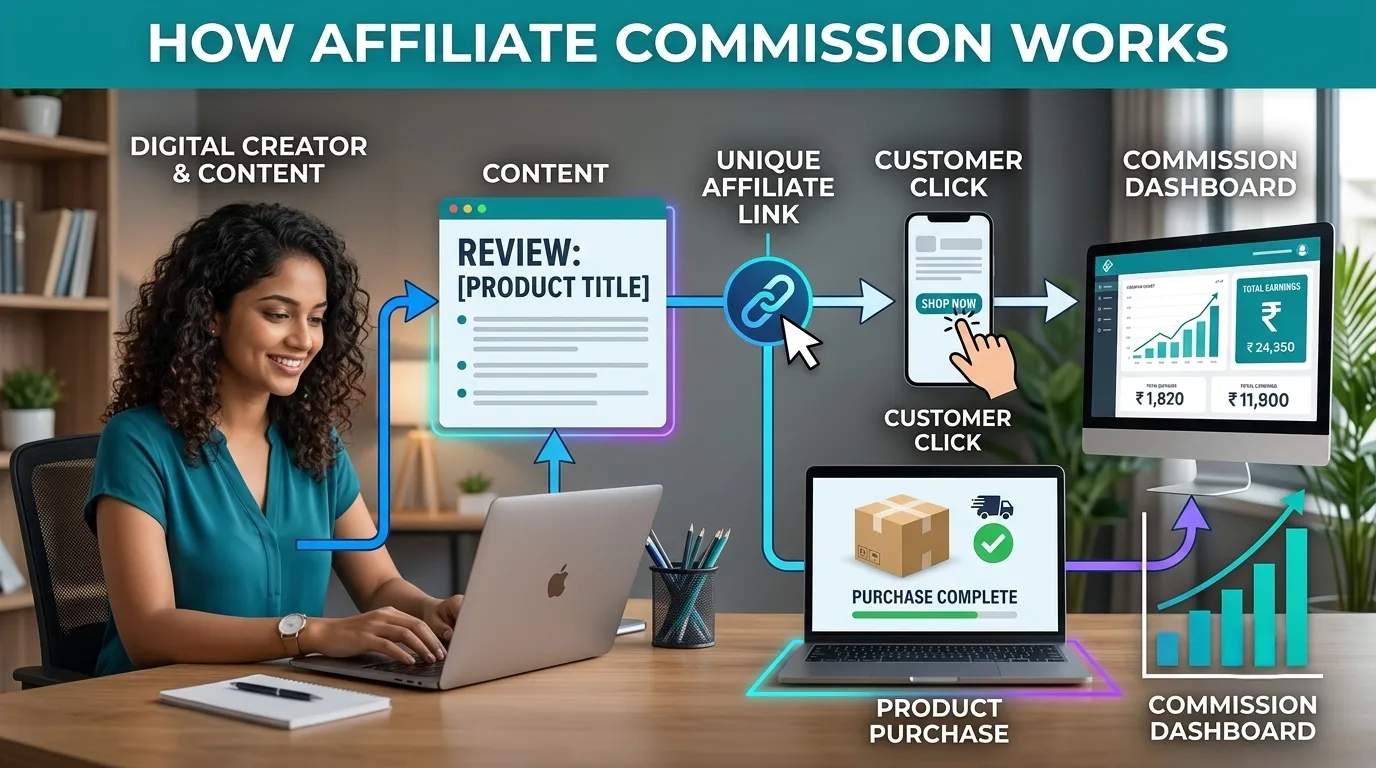
Program terms, commission structures, eligibility requirements, and tracking periods can differ, so creators should always check the current terms of the specific program before promoting it.
Create Your Tracking Link
Once accepted into an affiliate program, the creator normally receives a unique tracking URL or another tracking mechanism, which an Affiliate Marketing Course for YouTube & Instagram can teach creators to use correctly for tracking clicks, conversions, and affiliate commissions. The link allows the affiliate program to attribute qualifying activity to the creator according to its terms.
Place Links Where They Make Sense
Link placement should match the platform and the audience journey. For YouTube, relevant locations may include:
- Video descriptions
- Pinned comments
- Relevant calls to action
- Channel resources where appropriate
For Instagram, creators may use available profile links, Stories link features, or other platform-supported linking options, skills that an Affiliate Marketing Course for YouTube & Instagram can teach to help creators guide interested audiences toward relevant affiliate products.
An Affiliate Marketing Course for YouTube should demonstrate how to connect useful content with these conversion opportunities without making every piece of content feel like an advertisement.
Track Clicks and Commissions
Affiliate dashboards can provide useful information such as clicks, conversions, orders, and commissions, depending on the program, and an Affiliate Marketing Course for YouTube & Instagram can teach creators how to analyze this data and improve their affiliate marketing strategy. This data helps creators identify which content and products generate meaningful audience activity.
What an Affiliate Marketing Course for YouTube Should Teach
A practical Affiliate Marketing Course for YouTube should combine affiliate fundamentals with content strategy and platform-specific execution.
Affiliate Program Fundamentals
Learners should understand:
- What affiliate marketing is
- How affiliate tracking works
- Different affiliate program models
- Commission structures
- Cookie or attribution windows
- Program terms and restrictions
- Product selection
Understanding these basics helps creators make informed decisions before publishing promotional content.
Content Strategy for Conversions
Content should provide value before asking the audience to take action. Useful affiliate content formats can include:
- Product reviews
- Tutorials
- Product comparisons
- Buying guides
- Demonstrations
- “How I use this” videos
- Problem-solving content
The objective is not simply to mention a product. It is to answer the audience’s question and make the next step clear.
Disclosure and Compliance
Affiliate relationships should be disclosed clearly and according to the applicable laws, regulations, platform policies, and affiliate-program requirements, which an Affiliate Marketing Course for YouTube & Instagram can help creators understand before promoting products or services.
Creators should not assume that a single disclosure format works everywhere. Requirements can vary by country, platform, and program. A professional Affiliate Marketing Course for YouTube should therefore include disclosure and compliance as part of the training rather than treating them as an optional topic.
Analytics and Tracking
Creators should learn how to interpret basic performance information, including:
- Clicks
- Click-through rate where available
- Conversions
- Conversion rate
- Commission
- Revenue per conversion
- Top-performing content
The exact metrics available depend on the affiliate program and platform.
YouTube vs. Instagram Affiliate Marketing
YouTube and Instagram can both support affiliate marketing, but their content formats and audience journeys are different, which is why an Affiliate Marketing Course for YouTube & Instagram should teach platform-specific strategies for creating content, placing affiliate links, and guiding audiences toward relevant products.

YouTube Affiliate Strategy
YouTube can support detailed, search-oriented, and educational content. For example, a creator could publish:
- Product reviews
- Tutorials
- Comparison videos
- Buying guides
- Setup videos
- Product demonstrations
Descriptions and other supported link placements can provide a direct path from the video to a product page. YouTube content can also continue attracting viewers after publication, particularly when it addresses ongoing search demand.
Instagram Affiliate Strategy
Instagram is highly visual and can support short-form discovery, Stories, Reels, posts, and profile-based traffic. A creator might use a Reel to introduce a problem or product, then use an appropriate profile or Story link to guide interested viewers toward additional information, a strategy that an Affiliate Marketing Course for YouTube & Instagram can teach as part of Instagram affiliate marketing.
The key is to match the content format with the audience’s intent. An Affiliate Marketing Course for YouTube that also teaches Instagram should therefore explain the differences between long-form video, short-form content, Stories, and profile-based discovery.
How Digital Chaabi Academy Structures This Training
Digital Chaabi Academy can position affiliate marketing training around the practical connection between content creation and monetization. The learning process can cover areas such as:
- Affiliate marketing fundamentals
- Niche selection
- Product research
- YouTube content strategy
- Instagram content strategy
- Affiliate link placement
- Conversion-focused calls to action
- Basic tracking and analytics
The practical value of this approach is that learners can understand affiliate marketing as a complete workflow rather than as an isolated link-building activity. Learners should also review the current course syllabus, practical exercises, instructor information, and program terms before enrolling because training content can change over time.
Career and Freelance Opportunities After Affiliate Marketing Training
Affiliate marketing knowledge can complement several digital marketing and creator-focused skills.
Affiliate Content Creator
Creators can develop content around products, tools, services, or solutions that are relevant to their niche.
Social Media Affiliate Marketer
Professionals with social media skills can combine content planning, audience research, platform management, and affiliate promotion.
Affiliate Marketing Consultant
With sufficient practical experience, a professional may provide strategy support to creators or businesses working with affiliate programs, and an Affiliate Marketing Course for YouTube & Instagram can help learners develop foundational skills in affiliate strategy, content planning, link placement, and performance tracking.
Content Marketing Professional
Affiliate marketing also connects naturally with content marketing because both require audience research, useful content, search intent, and measurable user actions, which an Affiliate Marketing Course for YouTube & Instagram can help creators understand when building content-to-commission strategies.
For learners interested in broader digital marketing skills, a Content Marketing Course, Social Media Marketing Course, or Performance Marketing Course can complement affiliate marketing knowledge.
Common Affiliate Marketing Mistakes
New affiliate marketers often make predictable mistakes.
Promoting Irrelevant Products
A high commission does not automatically make a product suitable for your audience. Product relevance should come before commission percentage.
Hiding Affiliate Links
Audiences should be able to understand where a recommendation leads and why the product is being recommended.
Ignoring Disclosure Requirements
Failing to disclose an affiliate relationship can create compliance and trust problems. Always review the current requirements applicable to your location, platform, and affiliate program.
Publishing Without Tracking
If you never review clicks, conversions, and commissions, it becomes difficult to understand what is actually working.
Expecting Instant Income
Affiliate marketing does not guarantee immediate earnings. Results can vary substantially based on niche, audience size, content quality, product demand, traffic, conversion rate, affiliate terms, and consistency.
Step-by-Step: Build Your First Affiliate Income Stream
A practical starting process can look like this:
Step 1: Choose a Specific Niche
Select a topic where you can consistently create useful content and recommend relevant products.
Step 2: Research Affiliate Programs
Compare program terms, product relevance, commission structures, eligibility requirements, and tracking rules.
Step 3: Select Your Content Format
Decide whether reviews, tutorials, comparisons, buying guides, Reels, Stories, or another format fits your audience.
Step 4: Create Useful Content
Focus on solving a real audience problem instead of creating content only to place an affiliate link.
Step 5: Add Relevant Affiliate Links
Place links where users naturally expect additional product information.
Step 6: Add Appropriate Disclosures
Clearly disclose affiliate relationships according to applicable requirements.
Step 7: Measure Performance
Review available data such as clicks, conversions, and commissions.
Step 8: Improve and Repeat
Identify content that generates meaningful engagement or conversions and use those insights to improve future content. This process creates a more structured approach than randomly adding affiliate links to posts or videos.
The Future of Affiliate Marketing on Content Platforms
Affiliate marketing continues to develop alongside creator platforms, social commerce, short-form video, search, and new content technologies, making an Affiliate Marketing Course for YouTube & Instagram useful for learning how to adapt content, promotion, and affiliate strategies across evolving digital platforms.
Creators are increasingly able to combine educational content, product discovery, community building, and measurable purchase journeys.
At the same time, automation and artificial intelligence can make content production faster. This increases the importance of original experience, accurate information, transparent recommendations, and genuine audience relationships, which an Affiliate Marketing Course for YouTube & Instagram can help creators develop while using AI tools responsibly for content planning and affiliate marketing.
The future strategy is therefore unlikely to be based only on publishing more links. Creators need to understand their audience, produce useful content, select relevant products, and measure the resulting customer journey.
Can ChatGPT Help With Affiliate Marketing?
Yes. AI tools such as ChatGPT can support several parts of an affiliate marketing workflow. For example, creators can use AI to help with:
- Video script outlines
- Product comparison structures
- Blog outlines
- Caption ideas
- FAQ generation
- Content calendars
- Keyword research brainstorming
- Call-to-action variations
At the same time, automation and artificial intelligence can make content production faster. This increases the importance of original experience, accurate information, transparent recommendations, and genuine audience relationships, which an Affiliate Marketing Course for YouTube & Instagram can help creators develop while using AI tools responsibly for content planning and affiliate marketing. An Affiliate Marketing Course for YouTube that includes AI should therefore teach learners how to use AI as a productivity tool while maintaining accuracy, originality, and transparency.
Frequently Asked Questions
Q1. Which course is best for affiliate marketing?
There is no single course that is suitable for every learner. Look for training that covers affiliate fundamentals, content strategy, platform-specific promotion, tracking, disclosures, and practical implementation.
Q2. How can I earn ₹1 lakh per month through digital marketing?
There is no guaranteed income path to a specific monthly amount. Digital marketing professionals may combine employment, freelancing, affiliate commissions, consulting, advertising, or other services depending on their skills and experience.
Q3. Can I use ChatGPT for affiliate marketing?
Yes. ChatGPT can help with research structures, outlines, scripts, captions, and content ideas. Product claims, pricing, affiliate terms, and other current information should still be independently verified.
Q4. How do I get commission from affiliate marketing?
Typically, you join an affiliate program, receive a tracking link, promote relevant products through permitted channels, generate qualifying activity, and receive commission according to the program’s terms.
Q5. Do I need a large following to start affiliate marketing?
Not necessarily. Audience relevance and trust can be important factors, although actual results depend on factors such as traffic, niche, product demand, content quality, and conversion rates.
Q6. How long does affiliate marketing take to generate income?
There is no universal timeline. Some creators may generate commissions relatively quickly, while others may take considerably longer. Results depend on traffic, audience intent, content quality, product-market fit, conversion rates, and consistency.
Q7. Should I start with YouTube or Instagram?
Consider where your existing audience is most active and which content format matches your strengths. YouTube can support detailed educational and review content, while Instagram offers visual discovery through formats such as Reels and Stories.
Q8. What makes an Affiliate Marketing Course for YouTube different from a general marketing course?
It focuses specifically on the relationship between YouTube content and affiliate monetization, including content formats, link placement, calls to action, tracking, disclosures, and conversion analysis.
Conclusion
An Affiliate Marketing Course for YouTube should teach much more than the definition of affiliate marketing. Creators need to understand how to choose relevant affiliate programs, create useful content, place links appropriately, disclose relationships, measure performance, and improve their strategy based on actual data.
YouTube and Instagram also require different approaches. YouTube can support detailed reviews, tutorials, and search-focused content, while Instagram can support visual discovery, Reels, Stories, and profile-based traffic. The central idea is simple: affiliate marketing works as a complete content-to-commission process, not as random link placement.
If you’re already creating content but want to understand the mechanics behind affiliate monetization, Digital Chaabi Academy’s Affiliate Marketing Course for YouTube can be explored as one possible training option. Review its current syllabus, practical components, and course details to determine whether they match your learning goals.