

A freelancer once reached out during an active campaign because a client’s cost per click had increased unexpectedly. The technical explanation wasn’t necessarily the biggest problem. The real challenge was explaining what happened clearly enough for the client to understand the situation and trust the next steps. That’s the real gap a Google Ads Course for Freelancers should help close.
Knowing how to create a campaign is one skill. Managing that campaign over several weeks, analyzing performance, communicating changes, preparing reports, and responding professionally when results fluctuate are completely different skills.
Many Google Ads courses concentrate heavily on campaign setup, including keywords, bidding, ad groups, targeting, and Quality Score. These fundamentals matter, but freelance work continues long after the campaign goes live. If you’re considering becoming a Google Ads freelancer, or you’ve already started managing client campaigns, understanding campaign management and client reporting can help you build a more structured freelance workflow.
Why Google Ads Campaign Management Matters
Launching a Google Ads campaign is only the beginning.
After a campaign goes live, performance can change because of competition, search behavior, budgets, targeting, landing-page experience, seasonality, conversion rates, and other factors. A Google Ads Course for Freelancers can help you understand how to monitor these changes, identify performance issues, and make informed campaign adjustments to maintain better results over time.
A freelancer therefore needs to know how to:
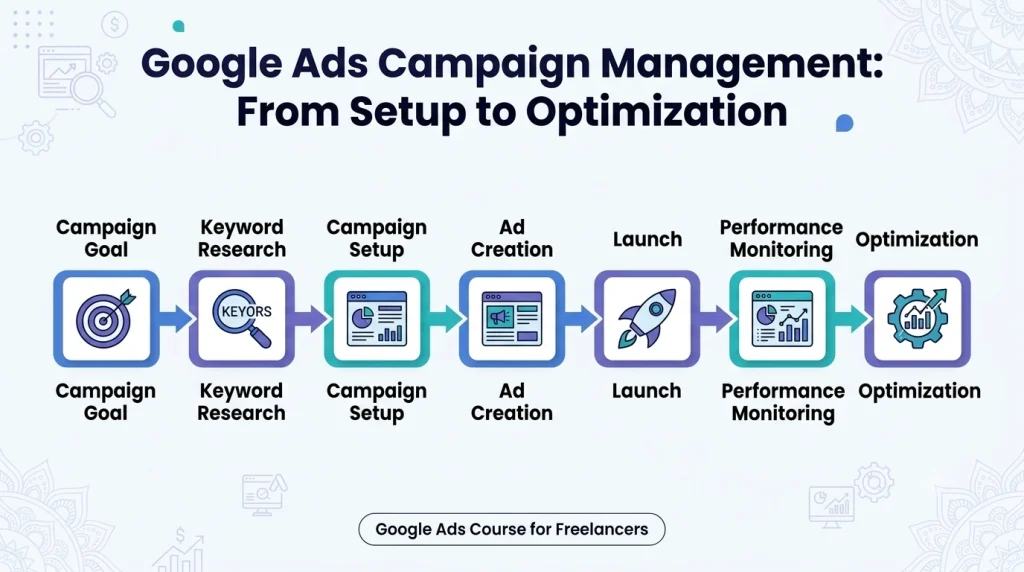
- Monitor campaign performance
- Analyze search terms and keywords
- Review conversion data
- Adjust bids and budgets
- Test ad variations
- Identify inefficient spending
- Improve targeting
- Monitor landing-page performance
- Communicate changes to clients
Campaign Setup vs Campaign Management
Campaign setup involves creating the initial structure. Campaign management involves what happens afterward.
| Campaign Setup | Campaign Management |
|---|---|
| Campaign creation | Performance monitoring |
| Keyword research | Search-term analysis |
| Ad creation | Ad testing |
| Initial bidding | Bid and budget adjustments |
| Targeting setup | Targeting refinement |
| Conversion tracking | Conversion analysis |
| Initial budget | Ongoing budget management |
A Google Ads Course for Freelancers should ideally teach both sides because clients generally need ongoing management rather than a campaign that is simply launched and left untouched.
Why Ongoing Optimization Matters
A campaign can perform differently from one week to another. For example, a keyword that previously generated conversions may later become less efficient because competition changes or customer search behavior shifts. A Google Ads Course for Freelancers can teach you how to analyze these performance changes, identify meaningful patterns, and make data-driven decisions instead of reacting emotionally to every fluctuation. The freelancer’s role is to examine the available data, understand what is changing, and make appropriate campaign adjustments.
What Should You Look for in a Google Ads Course?
There is no single course that is automatically the right choice for every learner. Instead, evaluate the curriculum based on the skills you actually want to develop.
1. Campaign Setup
The course should explain the fundamentals of creating campaigns, including:
- Campaign objectives
- Targeting
- Keywords
- Ad groups
- Ad assets
- Bidding
- Budgets
- Conversion tracking
2. Campaign Management
Look for practical training covering:
- Performance monitoring
- Search-term analysis
- Negative keywords
- Budget optimization
- Bid adjustments
- Ad testing
- Conversion analysis
- Account structure
3. Practical Account Experience
Theory alone may not provide enough experience. A strong learning program should provide opportunities to work through realistic campaign scenarios and understand how account performance changes over time.
4. Client Reporting
Freelancers need more than technical platform knowledge. They should also understand how to turn campaign data into understandable business updates.
5. Client Communication
Consider whether the course teaches:
- Client onboarding
- Expectation setting
- Reporting frequency
- Performance communication
- Scope management
- Professional follow-ups
A Google Ads Course for Freelancers becomes considerably more practical when these client-facing skills are included alongside technical training.
Is Google Ads Difficult to Learn?
The basic mechanics of Google Ads are learnable with consistent practice. The more challenging part is developing the judgment required to interpret campaign performance and decide what action, if any, should be taken. For example, a temporary increase in cost per click does not automatically mean the campaign is failing. You may need to examine:
- Search terms
- Competition
- Impression share
- Conversion rates
- Click-through rate
- Budget limitations
- Geographic performance
- Device performance
- Landing-page experience
Technical Knowledge vs Practical Judgment
Technical Knowledge
This includes understanding:
- Campaign settings
- Keywords
- Bidding
- Ads
- Audiences
- Conversion tracking
- Reports
Practical Judgment
This involves understanding:
- When to make changes
- When not to make changes
- Which metric deserves attention
- Whether a performance change is temporary
- How a change may affect the rest of the account
This distinction is important for anyone completing a Google Ads Course for Freelancers because freelance clients expect you to interpret information, not simply operate the advertising interface.
What Should a Freelancer-Focused Google Ads Course Teach?
A general Google Ads course may concentrate on platform knowledge. However, a Google Ads Course for Freelancers should provide an additional layer of business and client-management skills, helping freelancers handle client communication, campaign expectations, reporting, pricing, and ongoing account management more effectively.
Pricing and Service Packages
Freelancers need to understand different ways of structuring their services. Possible approaches include:
- Fixed monthly management fees
- Project-based audits
- Setup fees
- Hourly consulting
- Customized retainers
The appropriate structure depends on account complexity, workload, client requirements, experience, and the services being provided.
Client Onboarding
Before accessing an account, freelancers should understand:
- Business objectives
- Target audience
- Products or services
- Geographic markets
- Advertising budget
- Conversion goals
- Existing marketing activity
- Previous campaign performance
A structured onboarding process reduces misunderstandings later.
Access and Account Setup
A freelancer may need appropriate access to advertising accounts, analytics systems, conversion tracking, landing pages, and other relevant tools. Access should be handled securely and according to the client’s account-management procedures.
Scope Management
One of the biggest challenges in freelancing is scope creep. A freelancer should clearly define:
- What services are included
- How often campaigns are reviewed
- Reporting frequency
- Communication channels
- Response expectations
- What counts as additional work
Why Freelance-Specific Training Matters
A Google Ads Course for Freelancers should prepare learners for both sides of the profession:
Technical Skills + Client Management Skills = More Complete Freelance Preparation
Client Reporting: An Essential Freelance Skill
Campaign reporting is one of the most important skills for independent Google Ads professionals. A Google Ads Course for Freelancers should teach you how to turn campaign data into clear, useful insights that clients can understand. A client usually doesn’t need every available metric. They need to understand what happened, why it matters, and what happens next.
Explain Numbers in Plain Language
Instead of simply showing a spreadsheet, explain:
- What changed?
- Why might it have changed?
- What performed well?
- What needs attention?
- What actions are planned?
For example, if traffic increased but conversions remained unchanged, the client should understand that increased clicks did not necessarily translate into improved business results.
Set Reporting Expectations
Reporting expectations should be established during onboarding. You may agree on:
- Weekly performance updates
- Monthly reports
- Monthly review calls
- Campaign alerts for significant issues
The appropriate frequency depends on the account and client requirements.
Communicate Underperformance Professionally
Not every campaign produces strong results immediately. When performance falls, avoid hiding the problem. A professional update should explain:
- What happened
- What the data indicates
- What has already been changed
- What will be monitored next
Use Visual Reports
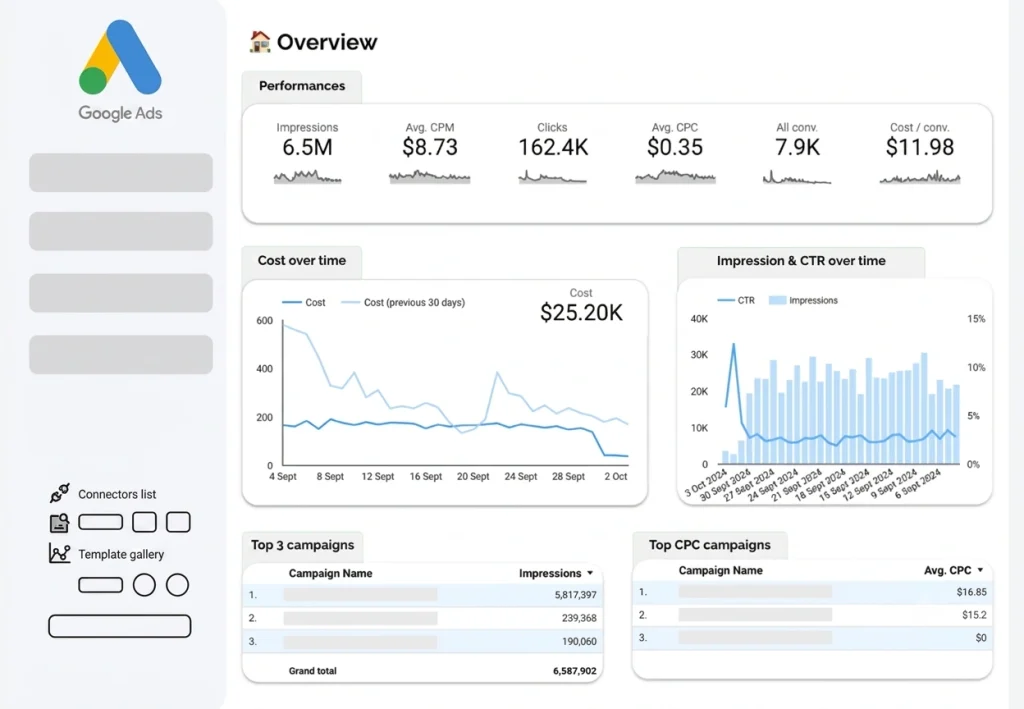
Charts and simple summaries can make performance easier to understand. Useful report sections may include:
- Spend
- Clicks
- Impressions
- CTR
- Conversions
- Conversion rate
- Cost per conversion
- Revenue or lead value where tracking is available
- Key actions for the next period
What Makes a Good Client Report?
A useful report is:
- Clear
- Relevant
- Concise
- Data-driven
- Honest
- Action-oriented
A Google Ads Course for Freelancers that teaches reporting alongside campaign management can help learners develop a more complete client-service workflow.
How Digital Chaabi Academy Structures Google Ads Learning
Digital Chaabi Academy focuses on practical digital marketing skills, including Google Ads concepts relevant to campaign management and freelance work. For learners interested in freelancing, the learning process can cover both technical campaign knowledge and the professional skills needed to work with clients.
Practical Google Ads Training
A structured course can include areas such as:
- Google Ads fundamentals
- Campaign creation
- Keyword research
- Ad copy
- Bidding
- Budget management
- Conversion tracking
- Campaign optimization
- Performance analysis
- Client reporting
Freelance-Oriented Skills
The training can also introduce:
- Client onboarding
- Service structuring
- Reporting
- Professional communication
- Campaign documentation
- Account management
The objective is to help learners understand that becoming a freelancer involves more than knowing where different Google Ads settings are located. A Google Ads Course for Freelancers should connect technical learning with the practical workflow of managing client accounts.
Freelance Opportunities After Google Ads Training
Google Ads knowledge can support several types of freelance services.
1. Google Ads Campaign Management
Freelancers can manage campaigns for businesses that need ongoing PPC support. A Google Ads Course for Freelancers can prepare you for this type of work by developing practical campaign-management and client-service skills. Typical responsibilities may include:
- Campaign monitoring
- Keyword management
- Ad testing
- Budget adjustments
- Conversion tracking
- Performance reporting
2. Google Ads Audits
An audit can involve reviewing an existing account and identifying areas for improvement. This may include:
- Account structure
- Keywords
- Search terms
- Ad assets
- Conversion tracking
- Budget allocation
- Targeting
3. PPC Consulting
Experienced professionals may provide strategic recommendations without handling daily account management.
4. Combined Digital Marketing Services
Google Ads can be combined with:
- SEO
- Social media marketing
- Content marketing
- Landing-page optimization
- Email marketing
This can be useful for clients who prefer working with one freelancer across multiple marketing activities.
5. Agency Subcontracting
Some agencies work with independent specialists for campaign management, audits, optimization, or temporary workload support.
Building Long-Term Client Relationships
Freelance work can involve both one-time projects and ongoing retainers. Long-term relationships generally depend on clear communication, reliable delivery, transparent reporting, and appropriate expectations. A Google Ads Course for Freelancers can help learners understand these professional requirements before taking on independent clients.
Common Mistakes New Google Ads Freelancers Make
New freelancers often encounter similar challenges.
1. Going Silent During Slow Periods
A campaign may experience a weaker period. Not communicating with the client can create unnecessary uncertainty. Regular updates can help maintain transparency.
2. Promising Guaranteed Results
Google Ads performance depends on many variables. A Google Ads Course for Freelancers should teach freelancers to set realistic client expectations and communicate campaign limitations clearly. Avoid guaranteeing specific lead volumes, sales, cost-per-lead figures, or return on ad spend without appropriate evidence and control over the relevant factors.
3. Underpricing Management Work
Campaign management requires ongoing analysis and communication. Freelancers should consider the actual time, complexity, reporting requirements, and responsibility involved when setting fees.
4. Skipping Client Onboarding
Taking account access without understanding the client’s business objectives can create problems later.
5. Avoiding Difficult Conversations
If performance declines, explain the situation honestly and focus on measurable next steps.
6. Treating Campaign Management as Passive
Launching a campaign and checking it occasionally is different from actively managing an account. Regular monitoring should be based on the campaign’s goals, spend level, performance patterns, and business requirements.
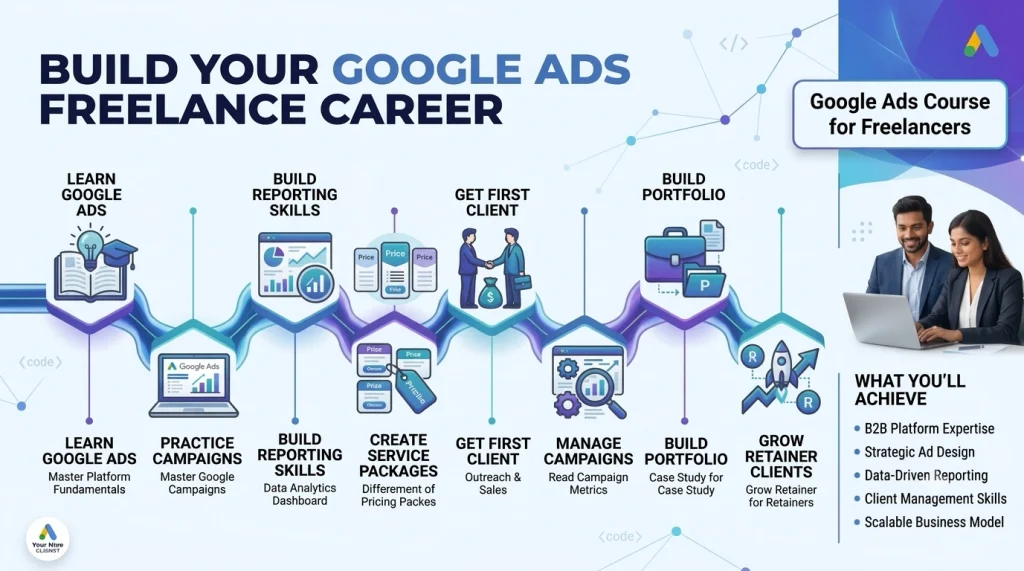
Step-by-Step: How to Build Your Freelance Google Ads Practice
If you’re planning to work independently, a structured progression can make the process easier to manage.
Step 1: Learn Google Ads Fundamentals
Understand campaigns, keywords, ads, bidding, budgets, targeting, conversion tracking, and reporting.
Step 2: Practice Campaign Analysis
Work through realistic examples and learn how different performance scenarios should be investigated.
Step 3: Create a Reporting Template
Build a simple reusable report containing the most relevant campaign metrics and action points.
Step 4: Define Your Services
Decide whether you want to offer:
- Campaign setup
- Monthly management
- Account audits
- Consulting
- Reporting
- Optimization
Step 5: Create an Onboarding Process
Prepare questions about:
- Business objectives
- Audience
- Budget
- Products or services
- Locations
- Conversion goals
- Existing marketing activity
Step 6: Start With Manageable Projects
Your first projects can help you develop practical experience, documentation, reporting habits, and client communication skills.
Step 7: Document Your Work
Maintain records of campaign changes, observations, tests, and results. This documentation can help you understand what worked and improve your future processes.
Step 8: Build Your Professional Portfolio
Where permitted by clients, document relevant case studies or anonymized campaign examples showing:
- Initial situation
- Strategy
- Actions taken
- Relevant performance changes
- Lessons learned
A Simple Freelance Workflow
Learn → Practice → Audit → Manage → Report → Improve → Build Experience
A Google Ads Course for Freelancers can provide the foundation for this workflow, but practical experience remains an important part of developing professional judgment.
How Freelance Google Ads Work Is Evolving
Google Ads continues to incorporate automation and machine-learning features into campaign management. This means freelancers increasingly need to understand not only how to adjust individual settings but also how to evaluate campaign objectives, conversion data, creative assets, audience signals, budgets, and overall account strategy.
AI and Automation
Automation can assist with tasks such as:
- Campaign optimization
- Bid management
- Audience signals
- Ad asset generation
- Reporting
- Data analysis
However, automation does not remove the need for human oversight. A freelancer still needs to understand:
- Business goals
- Conversion quality
- Budget constraints
- Customer intent
- Tracking accuracy
- Campaign structure
- Performance interpretation
This makes strategic thinking increasingly important alongside platform knowledge.
How Much Does Google Ads Cost Per 1,000 Impressions?
This question can be confusing because Google Ads does not pay advertisers for impressions. In advertising models that use cost per thousand impressions (CPM), the advertiser pays for ad exposure according to the applicable campaign and bidding model. For search campaigns, advertisers may commonly encounter cost-per-click (CPC) pricing, while other campaign types can use different bidding and measurement approaches. The actual cost varies based on factors such as:
- Campaign type
- Industry
- Competition
- Audience
- Location
- Ad quality
- Bidding strategy
- Targeting
- Market conditions
Therefore, there is no universal CPM or CPC figure that applies to every Google Ads campaign.
How Do Google Ads Freelancers Charge Clients?
Freelancers may structure their fees in different ways, including:
- Fixed monthly management fee
- Percentage of advertising spend
- Project-based fee
- Hourly consulting
- Customized retainer
The appropriate model depends on the account size, campaign complexity, services provided, reporting requirements, and freelancer experience. A Google Ads Course for Freelancers should help learners understand the difference between Google Ads costs paid to the advertising platform and professional fees charged by the freelancer.
FAQs
Q1. What is a Google Ads Course for Freelancers?
A Google Ads Course for Freelancers combines Google Ads campaign skills with freelance-specific topics such as client onboarding, campaign management, reporting, pricing, communication, and service delivery.
Q2. What should I learn before becoming a Google Ads freelancer?
Start with Google Ads fundamentals, including keywords, campaigns, ads, bidding, targeting, conversion tracking, analytics, and optimization. Then develop client communication, reporting, onboarding, and project-management skills.
Q3. Is Google Ads difficult to learn?
The basic platform can be learned with consistent practice. Developing the judgment required to analyze campaign performance and make appropriate optimization decisions generally requires more hands-on experience.
Q4. Do I need Google Ads certification to freelance?
A certification can demonstrate foundational knowledge, but it is not the only factor clients consider. Practical experience, communication, reporting, campaign understanding, and the ability to explain decisions are also important.
Q5. How much should a Google Ads freelancer charge?
There is no universal freelance rate. Fees can be structured as fixed management fees, percentage-of-spend arrangements, project fees, hourly consulting, or customized retainers. Pricing should reflect the account’s complexity and scope of work.
Q6. How often should Google Ads freelancers report to clients?
The appropriate frequency depends on the account and client expectations. Some freelancers provide brief weekly updates and a more detailed monthly report, while other arrangements may use different schedules.
Q7. What should a Google Ads client report include?
A report can include relevant information such as spend, impressions, clicks, CTR, conversions, conversion rate, cost per conversion, revenue or lead value where available, important observations, and planned next actions.
Q8. Can I freelance in Google Ads without experience?
You can begin learning and practicing without professional experience, but managing real client budgets requires appropriate preparation. Start by developing your technical skills and practicing campaign analysis before taking responsibility for client accounts.
Q9. Can Google Ads freelancing be combined with SEO?
Yes. Google Ads and SEO address different aspects of search marketing. Freelancers with appropriate skills may offer both services, provided they can manage the additional workload and deliver each service competently.
Q10. What makes a Google Ads Course for Freelancers different from a regular Google Ads course?
A general course may focus primarily on platform functionality. A Google Ads Course for Freelancers should additionally cover client onboarding, service pricing, reporting, communication, scope management, and ongoing campaign management.
Conclusion
A successful Google Ads freelancer needs more than the ability to launch an advertising campaign. You need to understand how campaigns are structured, how performance changes over time, how to analyze meaningful data, how to communicate results, and how to manage client expectations.
A practical Google Ads Course for Freelancers should therefore cover both technical and professional skills: campaign creation, keyword research, bidding, conversion tracking, optimization, reporting, onboarding, communication, and freelance service management. The strongest foundation comes from combining structured learning with practical campaign analysis and consistent documentation.
If you’re looking for structured training in this area, Digital Chaabi Academy’s Google Ads Course for Freelancers can be positioned around campaign management, practical learning, client reporting, and the professional skills required to work with Google Ads clients.