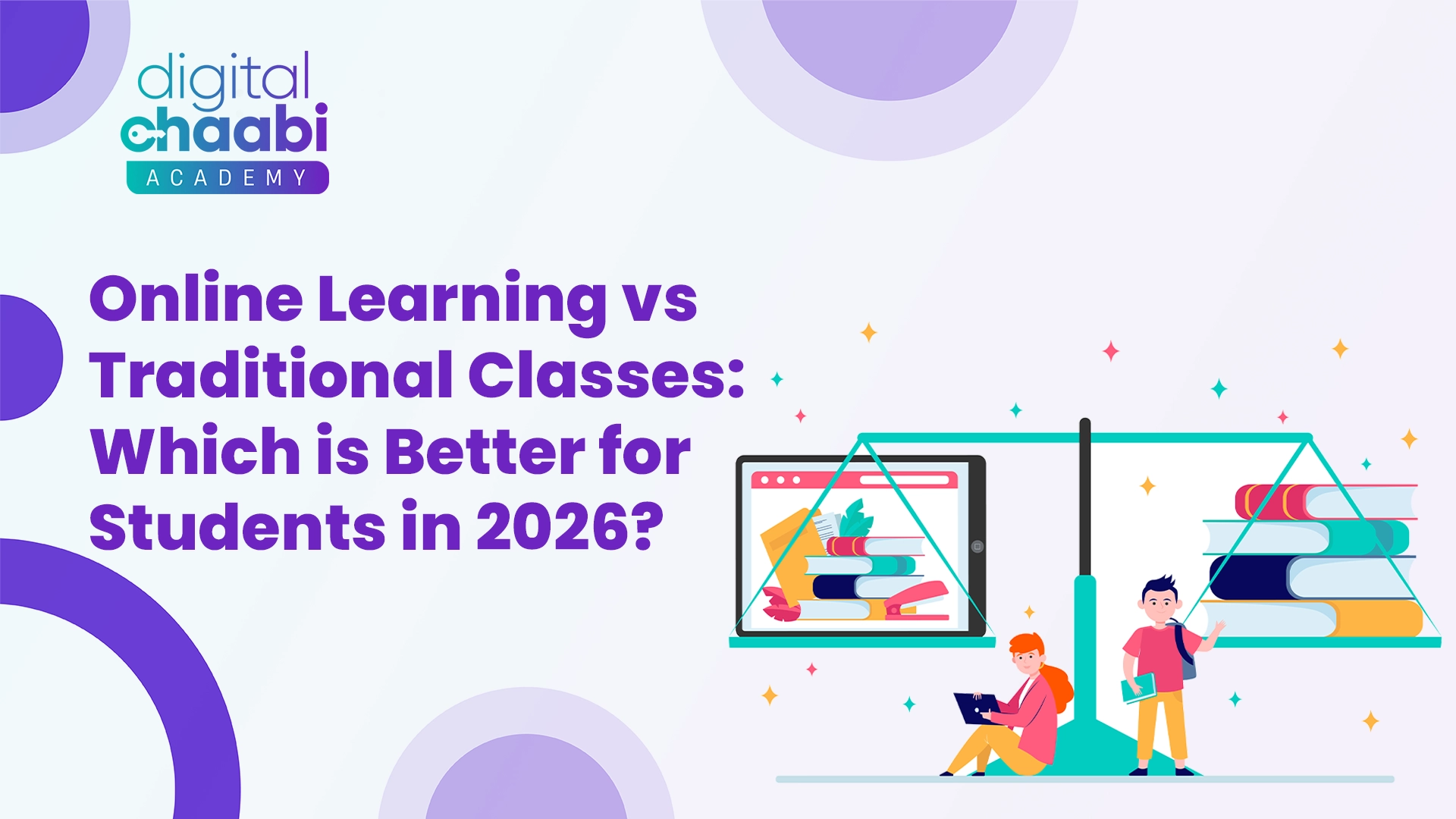
Online Learning vs Traditional Classes:-
Education is evolving rapidly. What was successful for students 10 years ago might not be working in the same way by 2026. Nowadays, parents and students often have a common concern: online learning vs traditional classes. Which one is more effective? Both learning styles offer advantages as well as challenges. Some students prefer to study at home, whereas others prefer studying in a classroom.

It explains the difference between online and traditional classes well enough that every student is able to understand and determine which is best for them in 2026.
The debate around Online Learning vs Traditional Classes has become more relevant as education continues to evolve.
Understanding Online Learning and Traditional Classes
Before comparing, it’s crucial to comprehend both systems in detail.
Online learning, as opposed to classroom-based learning, is a comparative study of classroom-based and digital learning.
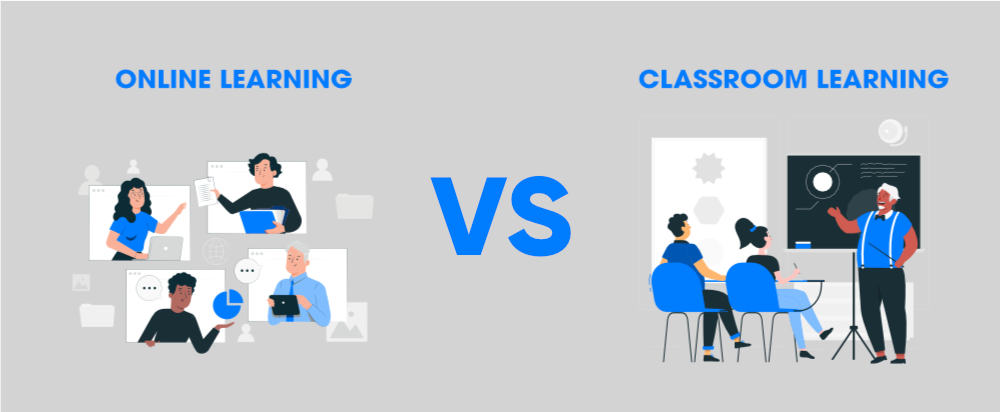
Online learning is the process of studying via the internet, apps, videos, and other digital platforms. Traditional classes involve studying in classrooms that are physically based with classmates and teachers.
Both systems seek to teach students, but the way they learn is different.
What Is Online Learning in 2026?
The popularity of online learning has increased significantly in the last few years. By 2026, online education will be more interactive, advanced, and adaptable. Students can attend live classes and watch videos recorded as well as complete online assignments, and can communicate electronically.
In the discussion of traditional and online classes, online learning is distinguished by technological advancements and flexibility.
Online learning options:
- Learn from any location
- Flexible schedules
- Recorded lectures to help with revision
- Global access to teachers
This new form of education is a part of the digital age of education in 2026, and it is being implemented extremely well.

What Are Traditional Classes Like in 2026?
The traditional classes are the most recognizable method of learning. Students attend colleges or schools where they sit in classrooms and interact with their teachers in person.
When it comes to discussing online learning and traditional classes, traditional classes are renowned for their structure and discipline.
Traditional classes provide:
- Face-to-face interactions
- Fixed schedules
- Classroom discipline
- Direct teacher direction
This system continues to play an important part in teaching methods for students.
Flexibility: A Major Difference
Flexibility is among the main factors that influence online learning in comparison to conventional classes.
Students can learn online and learn at their own pace. Students can stop videos or revise their topics and keep track of time. This can be very beneficial for those who struggle with learning or students who are working.
Traditional classes have set times. Students must attend classes during certain times, which might not work for all students.
To be flexible, online learning vs traditional classes clearly illustrates online learning as the winner.
Learning Comfort and Environment
Comfort is a major factor in the way students learn. In Online Learning vs Traditional Classes
, comfort levels differ greatly.
Online learning lets students learn at home, feeling comfortable and secure. Students can take classes without having to deal with the stress of travel.
Traditional classes are an environment for learning that is formal. Some students learn better in classes with instructors and other students.
Both approaches suit various learning styles, which allows an individual to choose between online and traditional classes.
Interaction and Communication
Interaction is crucial for clearly understanding concepts. In online learning as opposed to traditional classes, the methods of interaction differ.
Traditional classes provide face-to-face interactions. Students are able to ask questions immediately and feel more in touch with instructors.

Online learning is facilitated by chats, video calls, or discussion groups. While there is interaction, it might not feel as personal to certain students.
In terms of human-to-human connection, online learning vs traditional classes slightly favor traditional classrooms.
Cost and Affordability
Education costs are a major worry for a large number of families. When it comes to the case of online learning in comparison to traditional classes, online learning is usually less expensive.
Online learning can reduce:
- Costs of travel
- Costs for food and lodging
- The cost of printed materials
Traditional classes include costs for tuition, transportation, and living expenses.
In terms of affordability, online learning vs traditional classes definitely supports online learning.
Access to Learning Resources
Access to top-quality resources is a key factor in online education vs regular classes.
Online learning allows students access to:
- Lectures recorded
- E-books and PDFs
- Experts and courses from around the world
- Study material updated
Traditional classes rely on textbooks and teaching resources in the local area.
By 2026, the digital age of education will make online learning richer in the form of resources.
Skill Development and Practical Learning
Modern jobs require qualifications, not only degrees. In the case of online learning in comparison to traditional classes, the online platforms concentrate more on the development of skills.
Support for online learning:
- Technical expertise
- Digital tools
- Career-focused courses
- Relevant knowledge for the industry
Traditional classes concentrate more on exam preparation and theory.
In today’s workplaces, online learning vs traditional classes makes online learning more useful.
Discipline and Self-Motivation
Discipline is the area where the online learning experience versus traditional classes is a clear distinction.
Traditional classes are a source of discipline for students. The fixed schedules and supervision of the teacher help students stay focused.
Learning online requires self-control. Students must be able to manage their time and remain motivated.
Students who aren’t self-controlled may find online learning, as opposed to traditional classes, difficult in an online environment.
Technology and Learning Experience
Technology plays a significant role in learning online versus the traditional classroom.
The benefits of online learning include:
- AI-based tools
- Interactive quizzes
- Smart dashboards
- Learning paths that are personalized
Traditional classes make use of the most basic tools for teaching, such as books and boards.
By 2026, the methods of learning for students-Online Learning vs Traditional Classes
are evolving to be more tech-driven, which favors online learning.
Social Skills and Peer Learning
Social interaction aids students in growing emotionally. In Online Learning vs Traditional Classes
traditional classes, traditional classes are more beneficial.
Traditional classes aid students in:
- Create friendships
- Develop teamwork
- Improve communication skills
Online learning offers a limited amount of social interaction, even though there are discussion forums available.
To help develop social skills, online learning vs traditional classes can help with classroom learning.
Exams and Assessments
Assessment methods are changing to accommodate online learning as opposed to conventional classes.
Learning online can be used for:
- Online tests
- Assessments based on skills
- Project work
Traditional classes are based on written tests and internal tests.
For 2026, the trends in education 2026 indicate a shift toward real-world assessments that support online learning.
Which Is Better for Students in 2026?
There isn’t a universal answer for the world of online learning and conventional classes. The ideal choice is based on the Online Learning vs Traditional Classes student’s requirements, goals, and learning style.
Learning online is ideal for:
- Self-motivated students
- Learners with a focus on skills
- Flexible schedules
Traditional classes are the best choice for:
- Students who require discipline
- Learners from face-to-face
- Education in a structured manner
Many students today prefer mixing both of them and are referred to as blended learning.
Future of Education in 2026
The future of online learning and traditional classes does not mean substituting one for the other. It’s about combining the most beneficial aspects of both.
Education by 2026 is expected to focus on:
- Flexibility
- Skill development
- Technology integration
- Learning that is centered around the student
This approach is balanced and supports a variety of learning strategies for students-Online Learning vs Traditional Classes.
Conclusion
The issue about online learning and conventional classes is crucial for students to consider in 2026. Online learning provides flexibility as well as affordability and a skill-based education that is suitable for today’s jobs. Traditional classes offer discipline, social interaction, and teacher-led support. Both methods offer strengths as well as drawbacks. The most appropriate choice is based on the learner’s style of learning as well as their goals and degree. In 2026, a well-balanced approach that blends traditional and online learning could be the most efficient way to go. Students must make a wise choice by focusing on the things that help them develop and learn.
Frequently Asked Questions (FAQs)
1. Are online courses better than traditional instruction in 2026?
Learning online is ideal in terms of flexibility and the development of skills. Traditional classes are best for interaction and discipline. The ideal choice is dependent on the individual student.
2. Do students learn effectively with online education?
Yes, students can be successful through online learning when they are motivated and disciplined. A lot of careers today value online certificates.
3. Are traditional classes still important?
Yes, traditional classes are essential to build social skills as well as structured learning and direct instruction in person, particularly for students who are younger.
4. The more economical option? Traditional or online classes?
Learning online is generally cheaper because it cuts down on costs for accommodation, travel, and materials.
5. What is the most effective education technique to prepare for the future?
Blended learning that includes traditional and online classes is regarded as the most effective way to learn for the future.