Finishing a course is one thing. Figuring out what actually happens next is a completely different problem, and it’s the one that keeps a lot of students up at night scrolling job portals without much of a plan.
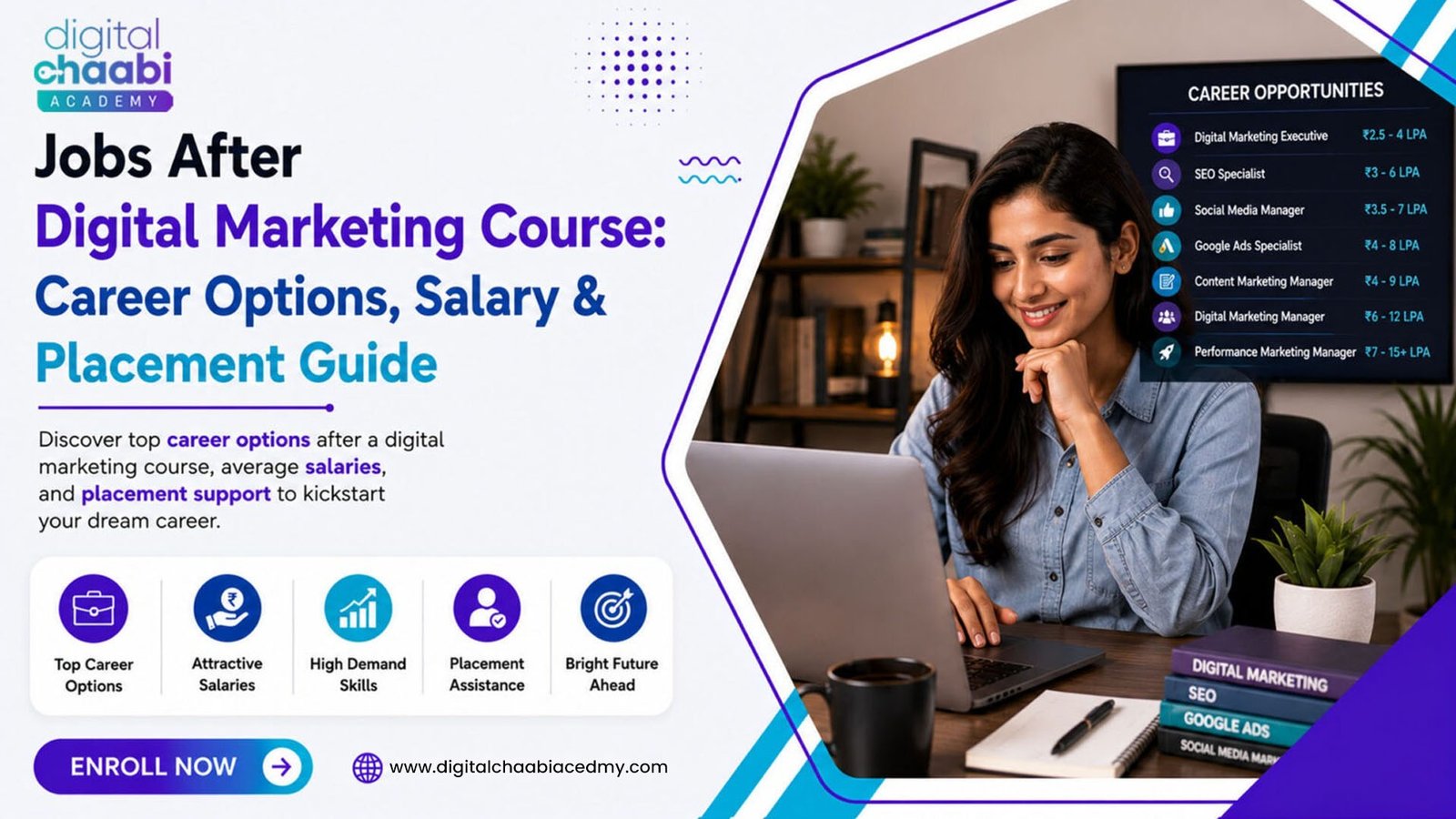
Jobs after digital marketing course typically include roles like SEO Executive, Social Media Executive, Content Writer, PPC Executive, and Digital Marketing Intern, with beginner salaries starting around ₹15,000 to ₹30,000 a month depending on the city and the depth of practical training completed. The course itself is only half the equation. What actually decides which of these roles you land is whether you walked out with something real to show, not just a certificate tucked away in a folder.
That’s the part worth sitting with before applying anywhere.
What Happens Right After a Digital Marketing Course?

For most students, the weeks right after finishing a course feel oddly quiet. There’s no more scheduled class, no assignment deadline, just a completion certificate and a vague sense that something should happen next. This is the stage where many students begin exploring jobs after digital marketing course completion and preparing for their first career opportunity.
What should happen is a shift from learning mode into applying mode. That means updating a resume around the skills actually practiced during the course, reaching out for internships even before job hunting formally begins, and treating whatever small projects were built during training as the beginning of a portfolio rather than a finished assignment to forget about.
Who benefits most from this transition period? Students who treat it as an active job search rather than a passive waiting game. Eligibility for most entry-level roles stays simple across the board—12th pass or a graduate degree from any stream, with the actual course serving as the practical skill layer employers care about. Taking this approach significantly improves your chances of securing jobs after digital marketing course completion.
Why Placement Outcomes Vary So Much Between Students
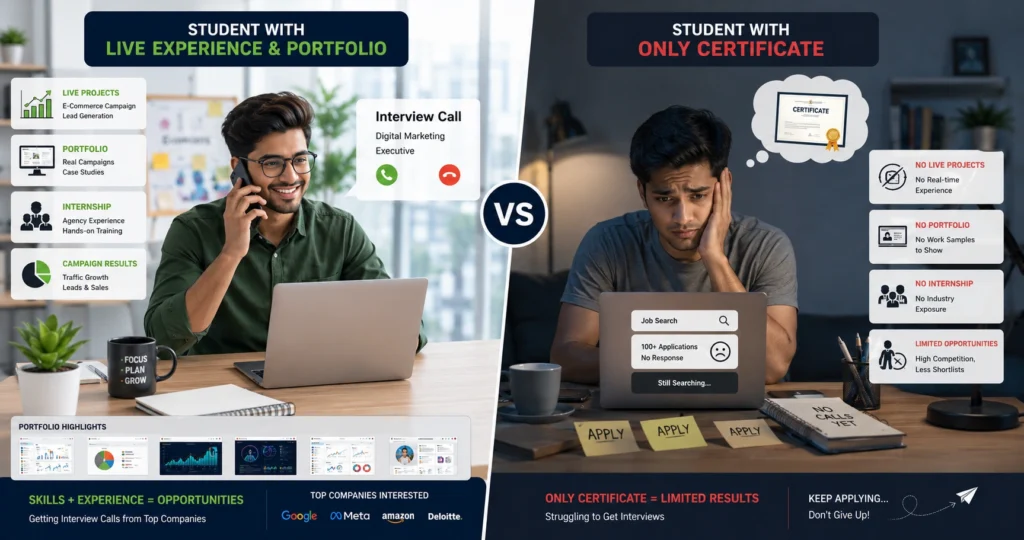
Two students can finish the exact same course and end up in very different places six months later. That gap usually comes down to what happened during the course, not after it.
Students who built a small portfolio, even something modest like a mock ad campaign or a self-written blog, tend to interview noticeably better than students who only attended lectures. Students who applied for internships during the course, rather than waiting until after completion, usually land their first real role faster too. And students who picked one specialization to go deep on, instead of staying a generalist, often find employers respond to their applications more quickly.
Is digital marketing a good career in 2026 regardless of these differences? Yes, broadly. But how quickly someone actually gets placed depends heavily on habits built during the course itself, not just the certificate at the end of it. These factors often determine how quickly candidates secure jobs after digital marketing course completion.
What Job Can I Get After a Digital Marketing Course?
After completing a course, most freshers qualify for SEO Executive, Social Media Executive, Content Writer, PPC Executive, or Digital Marketing Intern roles, depending on which area they specialized in during training.
SEO Executive suits students who focused on keyword research and on-page optimization. Social Media Executive suits students comfortable with content planning and platform-specific strategy. Content Writer fits naturally for students who leaned toward writing blogs or ad copy during their course. PPC Executive suits students who practiced running campaigns on Google or Meta Ads Manager. And Digital Marketing Intern remains the broadest entry point, often combining pieces of all of the above into one flexible starting role.
None of these are locked categories, though. Plenty of freshers move between two or three of these roles within their first year before settling into whichever one genuinely suits them. As you gain experience, the range of jobs after digital marketing course completion continues to expand, opening doors to higher-paying specialist and managerial positions.
Which Field in Digital Marketing Has the Highest Salary?

Performance marketing, technical SEO, and marketing analytics tend to sit at the top of the pay scale within digital marketing, mostly because they connect directly to measurable revenue outcomes rather than softer engagement metrics. These specializations also influence the type of jobs after digital marketing course completion that students can target, especially when they build strong practical skills in these areas.
Performance marketing pays well because managing an ad budget and proving return on that spend is something a business owner can measure in rupees almost immediately. Technical SEO commands a premium too, simply because fewer professionals genuinely understand it at a deep level, which keeps the pool of skilled people smaller than the demand for them. Marketing analytics rounds this out the ability to read a dashboard and turn it into an actual decision is rarer than most people assume, and companies pay accordingly for it.
Content writing and general social media management, by comparison, tend to pay modestly at entry level, though both can grow substantially once someone specializes into conversion-focused copywriting or strategic social media leadership.
Realistic Salary Expectations for Freshers
A fresher stepping into any of these roles right after a course typically starts somewhere between ₹15,000 and ₹30,000 a month, with the exact number shifting based on city, company size, and how much practical work was actually completed during training. These salary ranges are commonly seen among beginners exploring jobs after digital marketing course completion.
Metro cities and larger agencies tend to sit toward the higher end of that range. Smaller cities and startups often start a bit lower but sometimes offer faster hikes tied directly to results, since smaller teams notice individual contribution more clearly. One to three years in, most people move into the ₹30,000 to ₹60,000 range, assuming they’ve specialized in at least one high-value area by then.
None of these numbers are guaranteed by any course, regardless of what a brochure might promise. They’re realistic patterns based on how the market currently behaves, not a fixed outcome anyone can hand you on day one.
Skills That Actually Decide Which Job You Land

Beyond whatever a course syllabus technically covers, a handful of skills tend to separate students who get placed quickly from students who don’t. SEO fundamentals matter across nearly every role, even ones that aren’t SEO-specific, because search visibility touches almost every digital marketing decision somewhere.
Comfort running a small ad campaign helps too, even if the eventual job isn’t PPC-focused, since it shows a broader understanding of how paid and organic channels work together. Basic analytics literacy, being able to open Google Analytics and explain what a number actually means, tends to impress interviewers more than a long list of tools someone claims to know.
And then there’s the quieter skill that rarely gets mentioned in a syllabus at all being able to explain your own work clearly. A student who can walk an interviewer through a decision they made on a mock campaign, including what didn’t work, almost always outperforms a student reciting definitions from memory.
Job Roles Explained One by One
Understanding different roles is important when exploring jobs after digital marketing course completion because each position requires a different combination of skills and interests.
SEO Executive work involves keyword research, on-page optimization, and tracking how content performs over time in search rankings. It suits patient, detail-oriented students who don’t mind results taking weeks or months to show up.
Social Media Executive work centers on planning content calendars, posting consistently, and managing audience engagement. It suits students who enjoy the creative side and don’t mind the faster, more reactive pace social platforms demand.
Content Writer roles involve writing blogs, website copy, and ad copy across different tones depending on the brand. It suits students who genuinely enjoy writing and can adapt their voice depending on who they’re writing for.
PPC Executive work involves managing paid campaigns on Google and Meta, tracking spend against results daily. It suits students comfortable with numbers and quick, data-driven decisions.
Digital Marketing Intern remains the broadest starting point, often touching all of the above in smaller doses. It suits students who aren’t yet sure which specialization fits them best and want real exposure before committing to one lane. These internships often become the first step toward full-time jobs after digital marketing course completion.
Digital Chaabi Academy Insights
A pattern shows up consistently among students who get placed quickly after finishing training they almost always walk into interviews with something concrete built during the course, not just concepts they can define on request.
That’s the reasoning behind how training is structured at Digital Chaabi Academy. The focus stays on real, hands-on work throughout the course itself, running actual mock campaigns, writing genuine content, and working with real tools, so students finish with a small portfolio already in hand rather than starting from zero the moment classes end.
It changes the entire placement conversation. Instead of explaining what they learned, students can show what they’ve already done.
Common Mistakes Students Make After Finishing a Course
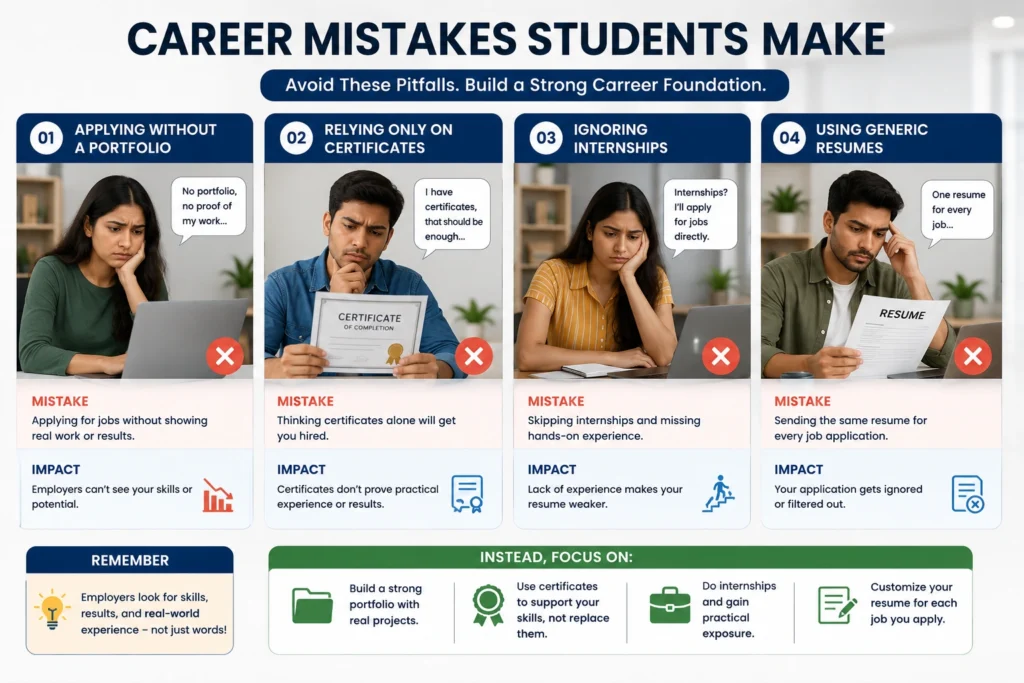
Waiting for the “perfect” job posting instead of applying broadly across several roles is probably the most common mistake students make while searching for jobs after digital marketing course completion. Many students also underestimate how much a small, self-built project matters, assuming employers only care about the certificate itself.
Applying without tailoring a resume to the specific role, listing every tool ever touched instead of highlighting genuine strengths, tends to backfire too. And treating the first job offer as a final destination rather than a stepping stone often slows down long-term salary growth, since the fastest income jumps usually come from specializing after that first role, not staying static within it.
Step-by-Step Placement Roadmap
Start by reviewing whatever was built during the course and turning it into a proper portfolio, even if it’s just two or three solid pieces rather than dozens of half-finished ones. Update a resume specifically around the skills practiced, not a generic template copied from somewhere online.
Apply broadly across SEO, social media, content, and PPC roles rather than narrowing too early, unless one area clearly stood out during training. Use mock interviews or peer practice to get comfortable explaining decisions made during coursework out loud. Accept the first reasonable offer that offers genuine learning, rather than holding out indefinitely for a perfect one. And once placed, keep building toward a specialization within the first year, since that’s usually what drives the next salary jump and creates better opportunities in jobs after digital marketing course completion.
Government vs Private vs Freelance Paths
Most jobs after digital marketing course land in the private sector, at agencies, startups, or in-house marketing teams, simply because that’s where the bulk of current demand sits. Government roles involving digital marketing skills do exist, mostly around public communication, digital literacy programs, or e-governance initiatives, though they’re comparatively rare and often require additional exams or specific eligibility beyond the course itself.
Freelance work offers a third path entirely, letting graduates build a client base independently rather than joining a company structure at all. It suits people comfortable with unpredictable income early on in exchange for flexibility. None of these paths is inherently better. The private sector tends to offer faster entry and steadier income for most freshers, while freelance work rewards patience and self-direction over time.
Future Scope of Digital Marketing Jobs
The future of digital marketing careers looks set to keep expanding rather than plateau, mostly because businesses across every sector continue shifting more of their budget online each year.
AI tools are absorbing more of the repetitive tasks within these roles, which pushes fresh graduates toward strategic thinking and creative judgment sooner than previous generations of marketers needed to develop those skills. Short-form video and AI-driven search are reshaping what content actually needs to look like to get noticed, and graduates who adapt early tend to move up faster than those who stick rigidly to what a course originally taught them.
Why Should Students in Hisar Choose This Career?

Hisar’s local businesses, coaching centres, and small manufacturers are steadily moving online, creating genuine local demand for the exact roles covered above, right within the city itself.
Students here aren’t limited to local opportunities either. Remote roles and freelance clients from bigger cities remain fully accessible without needing to relocate, which means a student in Hisar can realistically compete for the same jobs after digital marketing course as someone finishing an identical course in Delhi or Bangalore.
Which Institute Offers Practical Training and Internships in Hisar?
For students in and around Hisar, Digital Chaabi Academy offers practical, project-based digital marketing training along with internship opportunities designed specifically to prepare students for real placement conversations, not just theoretical exams.
The training structure leans on live campaigns and genuine tool usage throughout, so students leave with a portfolio already built rather than needing to construct one from scratch after the course ends. This practical approach helps students become more confident while applying for jobs after digital marketing course and starting their professional journey.
Conclusion
Jobs after digital marketing course exist in real numbers right now, but which one you land, and how quickly, depends far more on what was actually built during training than on the certificate handed out at the end of it. A small, genuine portfolio and the ability to talk through real decisions tend to matter more in interviews than any list of topics technically covered in a syllabus.
The roadmap stays fairly consistent regardless of background or city specialize a little, build something real, and start applying before you feel completely ready, because readiness usually shows up during the process rather than before it.
If you’re finishing a digital marketing course and want a genuine head start on placement, Digital Chaabi Academy can help through practical training, real project work, and internship support built around what employers are actually looking for.
FAQs
Q: What digital marketing course should I do for job placement?
Look for a course that includes live projects, internship exposure, and tool training rather than only lectures . Placement outcomes depend far more on practical work completed than on the course’s length or brand name alone.
Q: Which field in digital marketing has the highest salary?
Performance marketing, technical SEO, and marketing analytics tend to pay the most, since they connect directly to measurable business outcomes rather than softer engagement metrics.
Q: What job can I get after a digital marketing course?
Common entry-level roles include SEO Executive, Social Media Executive, Content Writer, PPC Executive, and Digital Marketing Intern, depending on which area you specialized in during training.
Q: What are 10 careers in marketing?
Beyond the core digital roles already covered, marketing careers also include Brand Manager, Market Research Analyst, Email Marketing Specialist, Influencer Marketing Manager, Public Relations Executive, Product Marketing Manager, Growth Marketer, Marketing Data Analyst, Affiliate Marketing Manager, and Marketing Operations Specialist.
Q: How soon after a course should I start applying for jobs?
Immediately, ideally even before the course technically ends, since applying while still learning keeps momentum going and often leads to internship offers that convert into full-time roles.
Q: Do all digital marketing jobs require the same skill set?
No. Each role emphasizes different skills SEO leans on research and patience, PPC leans on numbers and quick decisions, content writing leans on adaptable writing ability so it helps to specialize once you notice what genuinely suits you.
Q: Is it normal to switch roles within the first year after a course?
Yes, very common. Many freshers try two or three different roles early on before settling into whichever specialization actually fits their strengths and interests best.