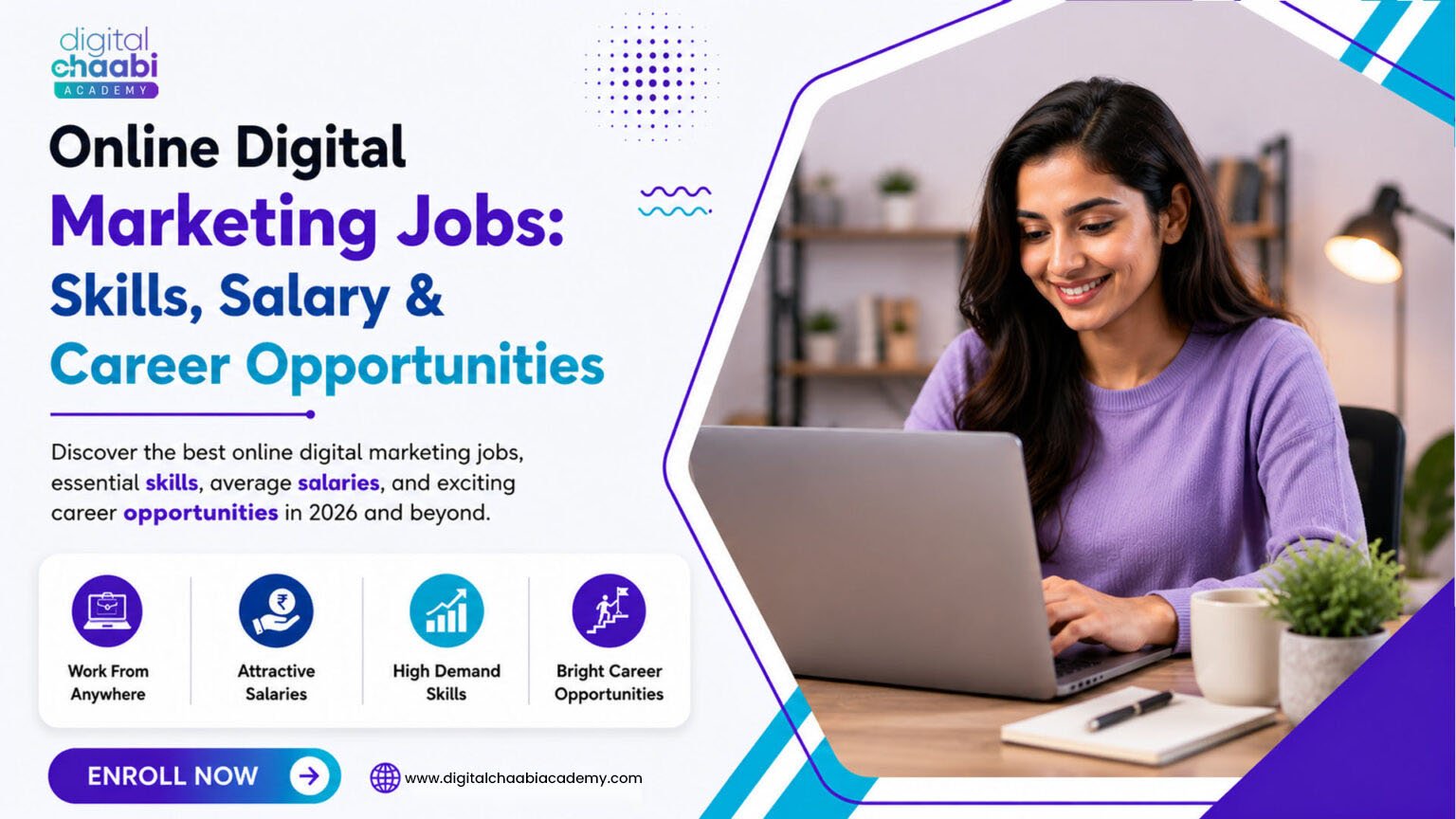
There’s a specific kind of relief in realizing you don’t need a corner office, a formal interview blazer, or even a city address to build a real career anymore. Online digital marketing jobs have quietly become one of the most accessible entry points into professional work in India no locked degree requirement, no fixed location, just a laptop and a willingness to actually learn the tools.
Online digital marketing jobs include remote roles like SEO executive, social media manager, content writer, PPC executive, and email marketer, with skills mattering far more to employers than a formal degree. Salaries for beginners typically start around ₹15,000 to ₹30,000 a month, growing fairly quickly once results start showing up on a resume and yes, even a 12th-pass student can genuinely build something real here.

What surprises most people is how little the industry cares about pedigree. Nobody in a hiring call is asking which college you went to. They’re asking if you can write a caption that stops someone mid-scroll, or explain why a campaign underperformed last week. That shift from credentials to capability is really the whole story of why this field keeps growing.
What Are Online Digital Marketing Jobs?
Online digital marketing jobs are remote or freelance roles where you promote products and services through digital channels search, social media, email, paid ads without needing to sit in an office at all. The work happens through a laptop, a shared drive, maybe a Slack channel, and a lot of independent judgment.
Who should choose this path? Honestly, anyone reasonably comfortable working without someone hovering over their shoulder. If you can manage your own time and communicate clearly over chat instead of face-to-face, you already have half the skillset that matters.
Eligibility is loose by design. Most companies hiring for remote digital roles accept:
- 12th pass or graduates from any background
- Freelancers looking for flexible, location-free work
- Working professionals wanting a side income or a full career switch
There’s no locked gate here. No specific stream, no minimum percentage cutoff. That alone makes it one of the more forgiving career paths available right now.
Why Remote Digital Marketing Careers Keep Growing
Companies figured out something during the last few years a lot of digital marketing work simply doesn’t need a physical desk. Writing doesn’t need an office. Running an ad campaign doesn’t need an office. Reading analytics definitely doesn’t need one.
That realization reshaped hiring in ways that are still playing out. Small businesses now hire remote freelancers instead of building expensive in-house teams from scratch. Global clients hire skilled Indian marketers because the cost-to-quality ratio makes sense for both sides. Agencies increasingly run entirely distributed teams, sometimes across three or four time zones without anyone noticing much difference in output.
This shift has also increased demand for Online Digital Marketing Jobs, giving skilled professionals the flexibility to work with companies, agencies, and clients from anywhere. Is it a good career in 2026? Yes. And the reason isn’t hype; it’s that remote-first hiring in this specific field has stopped being an experiment and has become the default operating model for a huge chunk of the industry.
Which Skills Are Highest Paid in Digital Marketing?

Performance marketing, SEO strategy, and marketing analytics tend to sit at the top of the pay scale, mostly because they touch revenue directly and take longer to genuinely master. These skills also open doors to better-paying Online Digital Marketing Jobs where companies value measurable results.
Performance marketing and PPC work carry weight because someone managing an ad budget and proving real ROI is doing something a business owner can measure in rupees, not vague engagement metrics. SEO strategy pays well too, particularly technical SEO fewer people understand it deeply, so the ones who do get to charge accordingly. Marketing analytics is similar. Turning a spreadsheet full of numbers into an actual decision is a rarer skill than it sounds.
Copywriting sits in an interesting spot here as well. General content writing pays modestly, but conversion-focused copy the kind that sits on a sales page or inside an ad and directly drives a purchase pays noticeably more, because the client can trace the value straight back to revenue.
Entry-level roles across all of these look fairly similar in pay at first. The gap opens up once you can point to specific, measurable results and build experience through practical Online Digital Marketing Jobs.
Can I Earn 10 Lakh Per Month from Digital Marketing?
It’s possible, but it’s rare enough that treating it as a realistic starting goal will only set you up for disappointment. That kind of income usually belongs to agency owners, established consultants managing large ad budgets across multiple clients, or marketers who’ve built and scaled their own products using the exact skills they picked up along the way.
A fresher shouldn’t expect anything close to this in year one. Not even year three, honestly. What’s actually realistic looks more like this:
- Freshers: ₹15,000–₹30,000 a month
- One to three years in: ₹30,000–₹60,000 a month
- Experienced specialists or freelancers with a solid portfolio: significantly higher, but earned gradually through consistent client results over years
Treat the big numbers you see online as a long-term ceiling worth aiming toward eventually. Not a starting salary you’re entitled to on day one.
Skills Required for Online Digital Marketing Jobs
The technical foundation isn’t complicated, even if it looks intimidating from the outside. SEO fundamentals matter keyword research, on-page optimization, understanding why a page ranks or doesn’t. Running ad campaigns on Google and Meta is another core piece, along with content writing or copywriting that doesn’t read like a template.
Reading analytics rounds things out. Google Analytics and Search Console aren’t optional extras; they’re how you prove your work actually did something. And basic design skills using something like Canva help more than people expect, especially for smaller teams where everyone wears multiple hats.
But there’s a quieter skill set that matters just as much for remote work specifically self-discipline and clear written communication. Nobody’s physically checking whether you’re working. Clients and managers judge you almost entirely through what you write in a message or a report, so being able to explain your progress clearly carries real weight, sometimes as much as the marketing skill itself.
Can a 12th Pass Do Digital Marketing?

Yes, without question. Digital marketing might be one of the few genuinely open career paths left where a 12th-pass student can sit across the table or across a video call from a graduate and compete on equal footing.
What actually matters instead of a degree is fairly simple. A small portfolio helps enormously, even something as modest as a self-run blog or an Instagram page you’ve grown yourself. Comfort with basic tools like Canva and Google Analytics matters more than people assume. And a genuine willingness to start with internships, even unpaid ones early on, tends to matter more than any transcript.
Eligibility criteria across most entry-level courses and jobs simply state 12th pass as the baseline. Nothing more specialized than that. It’s one of the rare fields where ambition and consistency can outweigh a slower or less traditional academic path entirely.
Top Online Job Roles You Can Apply For

Once the fundamentals are in place, here’s what the actual job postings tend to look like on freelance platforms and remote job boards.
- SEO Executive (Remote) handles keyword research and content optimization for websites you’ll likely never physically visit
- Social Media Manager (Remote) plans content calendars, manages engagement, and reports on reach
- Content Writer (Freelance/Remote) writes blogs, website copy, and ad copy across multiple clients
- PPC Executive (Remote) manages Google and Meta ad campaigns and reports back on spend versus return
- Virtual Marketing Assistant a common entry point that combines several smaller tasks into one flexible role
Most beginners land somewhere in the first four. The virtual assistant route is underrated too it exposes you to a bit of everything before you decide which specialization actually suits you.
[Internal Link: Freelancing Guide for Digital Marketers]
What a Typical Day Actually Looks Like
This part rarely gets covered honestly. A typical day for someone in a remote digital marketing role isn’t glamorous it’s a mix of checking overnight ad performance, replying to a client’s Slack message about why engagement dipped, drafting two or three pieces of content, and maybe an hour spent just reading analytics trying to spot a pattern nobody else noticed yet.
There’s a lot of independent problem-solving involved. No one’s standing over your desk explaining what went wrong with a campaign. You figure it out, document what you found, and move on to the next task. It suits people who like autonomy far more than it suits people who need constant direction.
Digital Chaabi Academy Insights
A pattern shows up consistently with students trying to break into remote-first roles specifically the ones who succeed fastest aren’t necessarily the ones who studied the most theory. They’re the ones who’d already run a mock campaign or written real content before their first client call ever happened.
That’s the gap practical, project-based training tries to close. At Digital Chaabi Academy, the focus stays on hands-on work real campaigns, real tools, real writing so students walk into freelance pitches or remote interviews with something concrete to show, rather than just a certificate sitting in a folder somewhere.
It also helps with something less tangible but just as important: confidence on a first client call, when you can actually speak from experience instead of guessing.
Common Mistakes Beginners Make
Underpricing freelance work is probably the most common one new freelancers accept far too little just to land any client at all, and that habit drags down earning potential for months afterward. Applying to remote roles with zero portfolio or proof of skill is another. A resume alone rarely convinces a remote employer who can’t meet you in person.
Ignoring communication skills is a subtler mistake. People assume only the marketing skill matters, then struggle to explain their work clearly over chat or email. And chasing headline income claims the ₹10 lakh a month kind instead of building steady, realistic experience first tends to leave people discouraged within a few months when reality doesn’t match the promise.
Step-by-Step Guide to Land an Online Job
Start by picking one skill rather than trying to learn everything at once SEO or content writing tends to be the easiest entry point. Learn it through structured, practical training instead of scattered YouTube videos that never quite connect into a full picture.
Build a small portfolio project entirely on your own before applying anywhere. Get comfortable with remote-friendly tools like Analytics, Canva, and Ads Manager. Apply for freelance gigs or remote internships early, even before you feel fully ready the readiness usually shows up during the work, not before it.
Use whatever early feedback you get to specialize further and raise your rates gradually. And keep learning well past your first job, because remote clients specifically expect marketers who stay current as platforms change, which they do constantly.
Freelance vs Full-Time Remote Roles
These two paths look similar from the outside but feel very different day to day. Freelancing offers more flexibility and control over your schedule, but income can be unpredictable, especially in the first year while you’re still building a client base. Full-time remote roles offer more stability a fixed salary, sometimes benefits in exchange for less flexibility over hours and client choice.
Neither is objectively better. Some people start freelance to build a portfolio, then move into a full-time remote role once they want steadier income. Others do the reverse, taking a full-time job first to learn the ropes before going independent. Both routes lead to roughly the same place eventually, just at different speeds.
Future Scope of Online Digital Marketing Jobs
The future of digital marketing careers, especially on the remote and freelance side, looks set to keep expanding rather than plateau anytime soon.
AI tools are absorbing more of the repetitive tasks drafting first versions of ad copy, generating basic reports which pushes remote marketers toward strategy and creative judgment instead of pure execution. Short-form video keeps dominating attention spans, and AI-powered search is quietly reshaping what content even needs to look like to get found. Global hiring for remote digital marketing talent from India also continues rising steadily, driven by a combination of cost-effectiveness and genuinely improving skill levels.
Why Should Students in Hisar Choose This Career?
Hisar’s growing base of small businesses, coaching centres, and local shops increasingly needs digital marketing help, and none of that work requires physically being anywhere near a metro city.
Online digital marketing jobs let students in Hisar access the same freelance projects and remote roles available to someone sitting in Delhi or Bangalore, without the added cost or disruption of relocating just to compete for opportunities.
Which Institute Offers Practical Training and Internships in Hisar?
For students in and around Hisar, Digital Chaabi Academy offers practical digital marketing training along with internship opportunities designed to prepare students for real, remote-ready work not just theoretical concepts read off a slide.
The training leans heavily on actual campaigns, real tools, and genuine writing practice, so the jump into freelance or remote roles feels considerably less uncertain once it’s time to actually apply.
Conclusion
Online digital marketing jobs offer something genuinely rare in today’s job market a path where a 12th-pass student and a graduate can compete purely on skill and portfolio, without either side worrying much about credentials. The pay grows steadily rather than overnight, but the flexibility and real, ongoing demand make it a solid long-term option for a huge range of people.
What decides who actually succeeds isn’t where they studied. It’s whether they started practicing early, kept a small portfolio building quietly in the background, and stayed willing to adapt as the field shifted around them because it will keep shifting.
If you’re ready to build real, remote-ready digital marketing skills instead of just researching them for another month, Digital Chaabi Academy can help through practical training and internships focused on real campaigns and genuinely client-ready work.
Pro Tip: If you are looking to master practical marketing skills through real client ad campaigns and in-house agency internships, explore the best digital marketing institute in Hisar at Digital Chaabi Academy.
FAQs
Q: Which skills are highest paid in digital marketing?
Performance marketing, technical SEO, and marketing analytics tend to pay the most, since they directly influence revenue and require deeper, harder-to-learn expertise than general marketing tasks.
Q: Can I earn 10 lakh per month from digital marketing?
It’s possible but rare, typically reserved for experienced consultants or agency owners managing large budgets not a realistic goal for someone just starting out in the field.
Q: Can a 12th pass do digital marketing?
Yes. Most digital marketing courses and entry-level jobs only require 12th pass as the minimum qualification, with practical skills mattering far more than the degree itself.
Q: Is digital marketing a good career salary-wise?
Yes, salaries start modestly for freshers but grow steadily with skill and experience, and freelance or specialist roles can eventually outpace typical entry-level salaries by a wide margin.
Q: Are online digital marketing jobs reliable long-term?
Yes, as remote and freelance hiring in this field keeps growing, driven by businesses that increasingly prefer flexible, skill-based hires over fixed in-house teams.
Q: Do I need special software to work in online digital marketing jobs?
Not initially. Basic tools like Canva, Google Analytics, and Meta Ads Manager cover most entry-level work, with more specialized software picked up naturally as you advance.
Q: How do I know if freelancing or a full-time remote job suits me better?
If steady income matters more to you right now than flexibility, a full-time remote role is usually the safer start. If you’d rather control your own schedule and can handle unpredictable income early on, freelancing might suit you better.