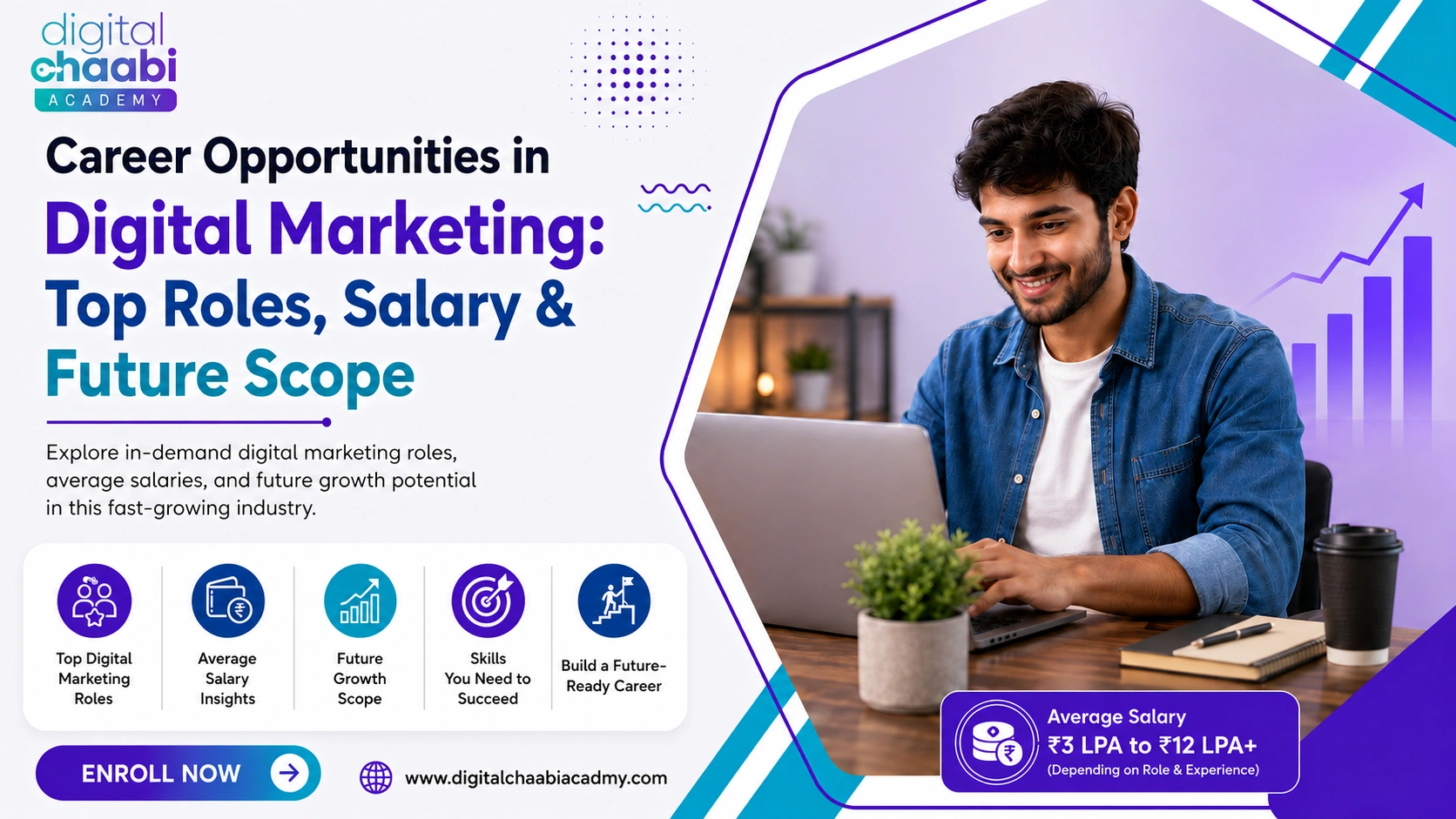
Career opportunities in digital marketing span roles like SEO specialist, social media manager, PPC expert, content strategist, and email marketer, with beginner salaries in India starting around ₹15,000–₹30,000 a month and growing fast with skill and experience. It’s one of the few fields where a fresher with the right skills can outpace someone with a decade-old degree but no real practical exposure.
That’s the part nobody tells you when you’re eighteen and confused about what to do with your life. Digital marketing doesn’t ask where you studied. It asks what you can actually do write a scroll-stopping caption, read a Google Analytics dashboard, or run an ad that doesn’t burn the whole budget on the first day.
And that’s exactly why so many students, career-switchers, and even working professionals are quietly moving toward it right now.
What Is Digital Marketing?
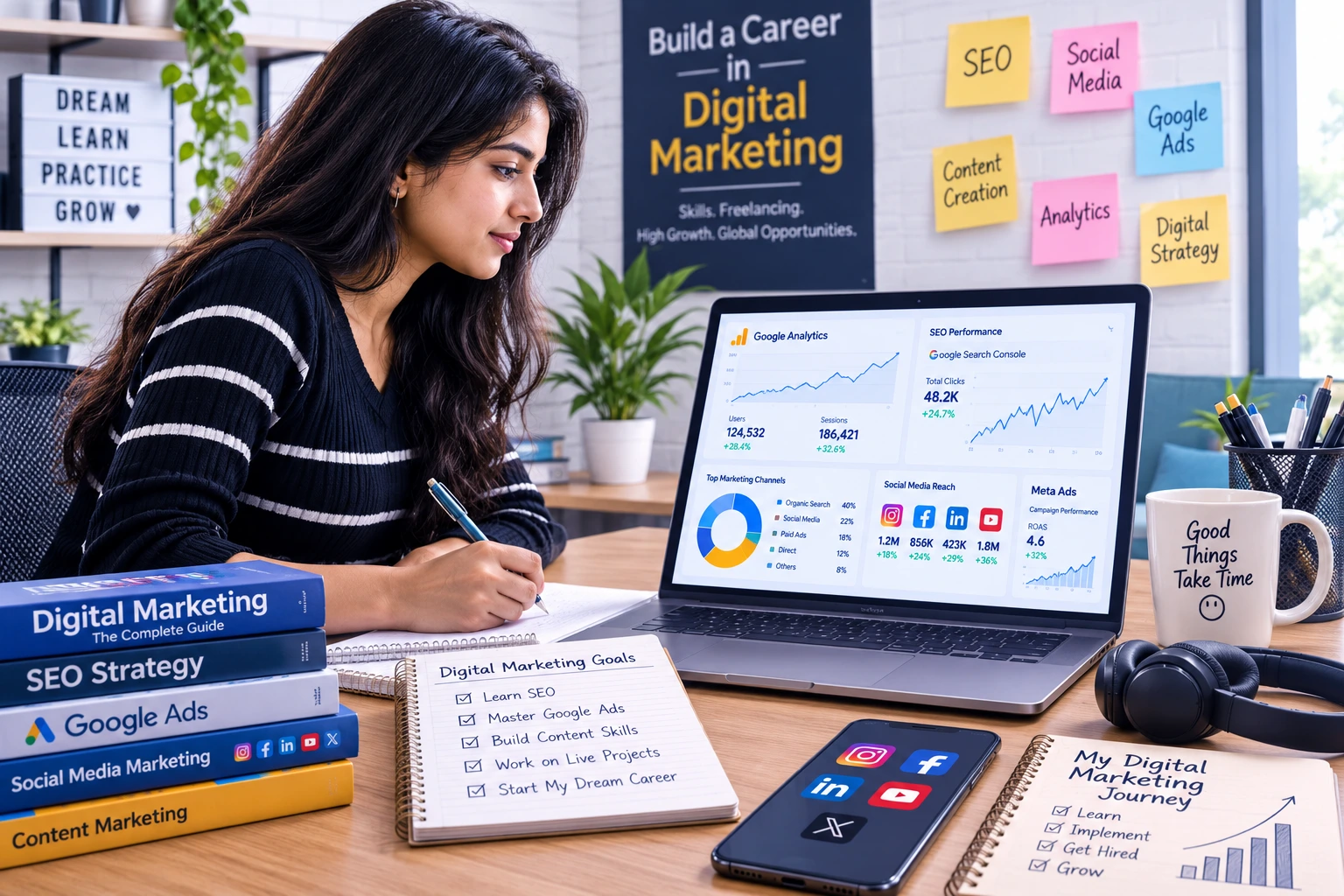
Digital marketing is, in the simplest words, the practice of promoting products, services, or ideas through digital channels search engines, social media, email, and paid ads instead of newspapers, hoardings, or TV.
It sounds simple until you actually sit with it. Underneath that one line is an entire ecosystem: digital marketing skills like SEO, running ad campaigns, writing content that converts, editing reels, and reading data that tells you whether any of it is even working.
Who should choose this field? Honestly anyone who’s comfortable with the internet and doesn’t mind learning constantly. You don’t need to be a coder. You don’t need an MBA. You need curiosity, a laptop, and the patience to learn tools one at a time.
Eligibility criteria are refreshingly loose. Most institutes and companies accept:
- 12th pass or graduates from any stream
- Working professionals wanting a switch
- Business owners who want to market their own products
There’s no single “right” background here. That’s rare in most career paths, and it’s part of why the field pulls in so many different kinds of people.
Why Career Opportunities in Digital Marketing Keep Growing
Every business from a local Hisar sweet shop to a national fashion brand, needs to be found online now. That single shift is what’s driving the boom.
A few reasons this isn’t slowing down:
- Small businesses are moving budgets from print/TV to Instagram and Google
- Startups hire digital marketers before they hire almost anyone else
- E-commerce depends entirely on digital marketing careers like performance marketing and SEO
- Even government and education sectors are hiring social media and content roles now
There’s also a quieter reason. Traditional marketing jobs required years to prove yourself. Digital marketing shows results in weeks a campaign either brings leads or it doesn’t. That immediacy is what keeps opening new career opportunities in digital marketing faster than most other industries can create jobs.
Which Career Opportunities in Digital Marketing is Available in 2026?
If you’re wondering what you’d actually be doing day to day, here’s the honest map of it.
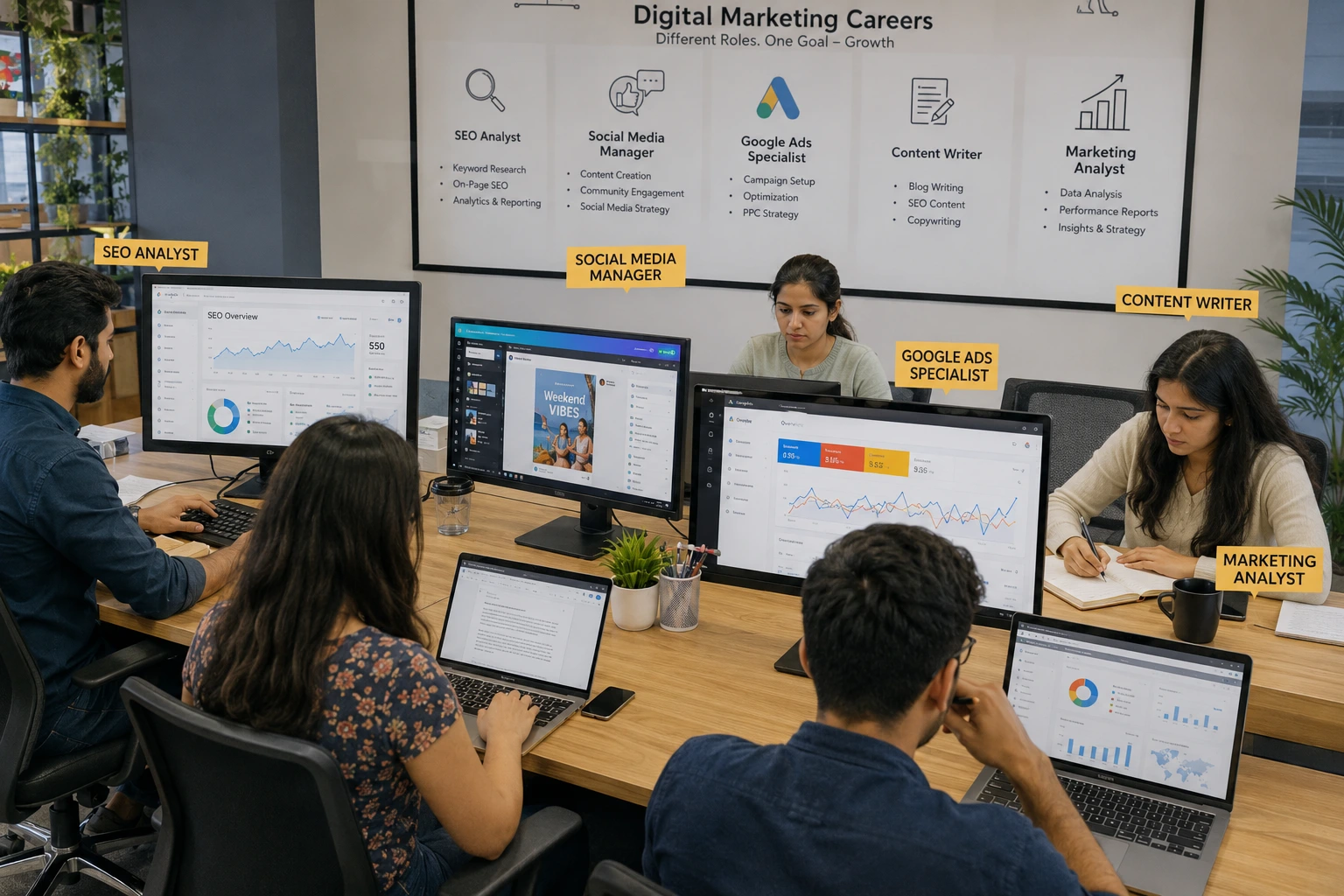
Career opportunities in digital marketing in 2026 broadly fall into these buckets:
- Search-focused roles — SEO Executive, SEO Analyst, Technical SEO Specialist
- Paid media roles — PPC Executive, Performance Marketer, Media Buyer
- Content roles — Content Writer, Copywriter, Content Strategist
- Social roles — Social Media Manager, Community Manager, Influencer Marketing Executive
- Design & video roles — Reels Editor, Graphic Designer, Video Marketer
- Analytics roles — Digital Marketing Analyst, Marketing Data Specialist
- Leadership roles (after experience) — Digital Marketing Manager, Head of Growth
None of these exist in isolation. In most companies, especially smaller ones, you’ll wear two or three of these hats at once early on and honestly, that’s where the real learning happens.
Career Opportunities in Digital Marketing Explained for Beginners
Let’s slow down here, because this is usually where confusion sets in.
A beginner doesn’t need to master everything on that list above. You pick one or two areas say, SEO and content and go deep first. The rest gets picked up on the job, almost by accident, because digital marketing teams are small and everyone ends up learning a bit of everything.
What actually helps a beginner stand out:
- A working portfolio, even a small blog or Instagram page you’ve grown yourself
- Basic comfort with tools like Google Analytics, Canva, and Meta Ads Manager
- The ability to explain why something worked, not just that it did
Employers hiring freshers aren’t expecting expertise. They’re checking if you can think if you understand that a caption isn’t just words, it’s a decision meant to make someone stop scrolling.
Is Digital Marketing a Good Career Option in 2026?
Short answer yes, and increasingly so.
The reason is almost boring in how consistent it is: businesses aren’t reducing their online presence, they’re expanding it. Every product launch, every new app, every small shop opening in a new locality needs someone managing how it shows up on Google and social media.
What makes it a genuinely good option in 2026 specifically:
- AI tools have removed grunt work, letting marketers focus on strategy instead of repetitive tasks
- Remote and freelance digital marketing work has become mainstream, not exceptional
- Companies are creating dedicated in-house digital teams instead of only outsourcing
It’s not a career without effort you’ll need to keep learning as platforms change. But “good career” doesn’t mean easy. It means there’s real, growing demand, and that part is hard to argue with.
What Salary Can a Digital Marketing Fresher Expect in India?
This is usually the first real question on everyone’s mind, so let’s be direct about it.
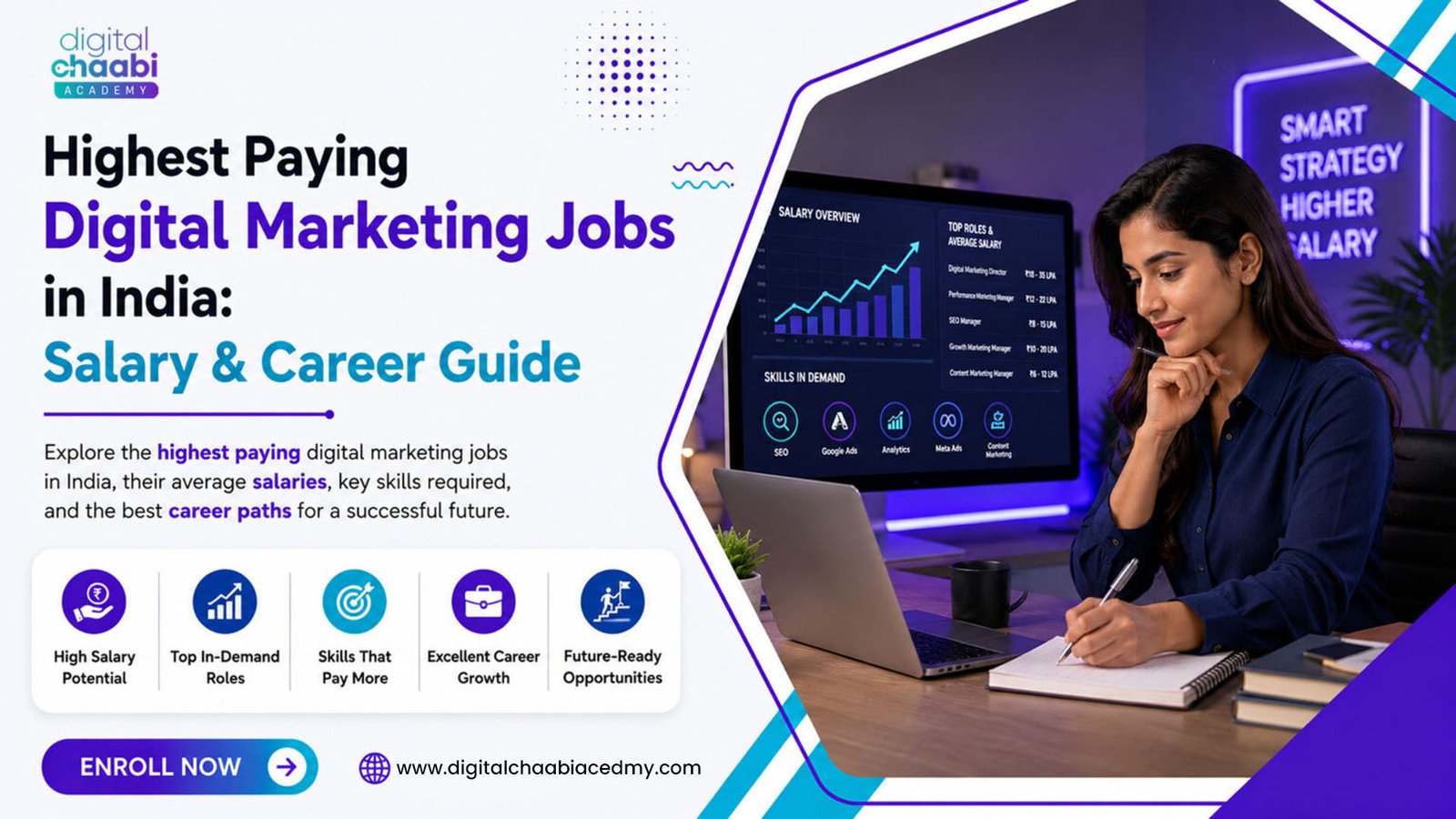
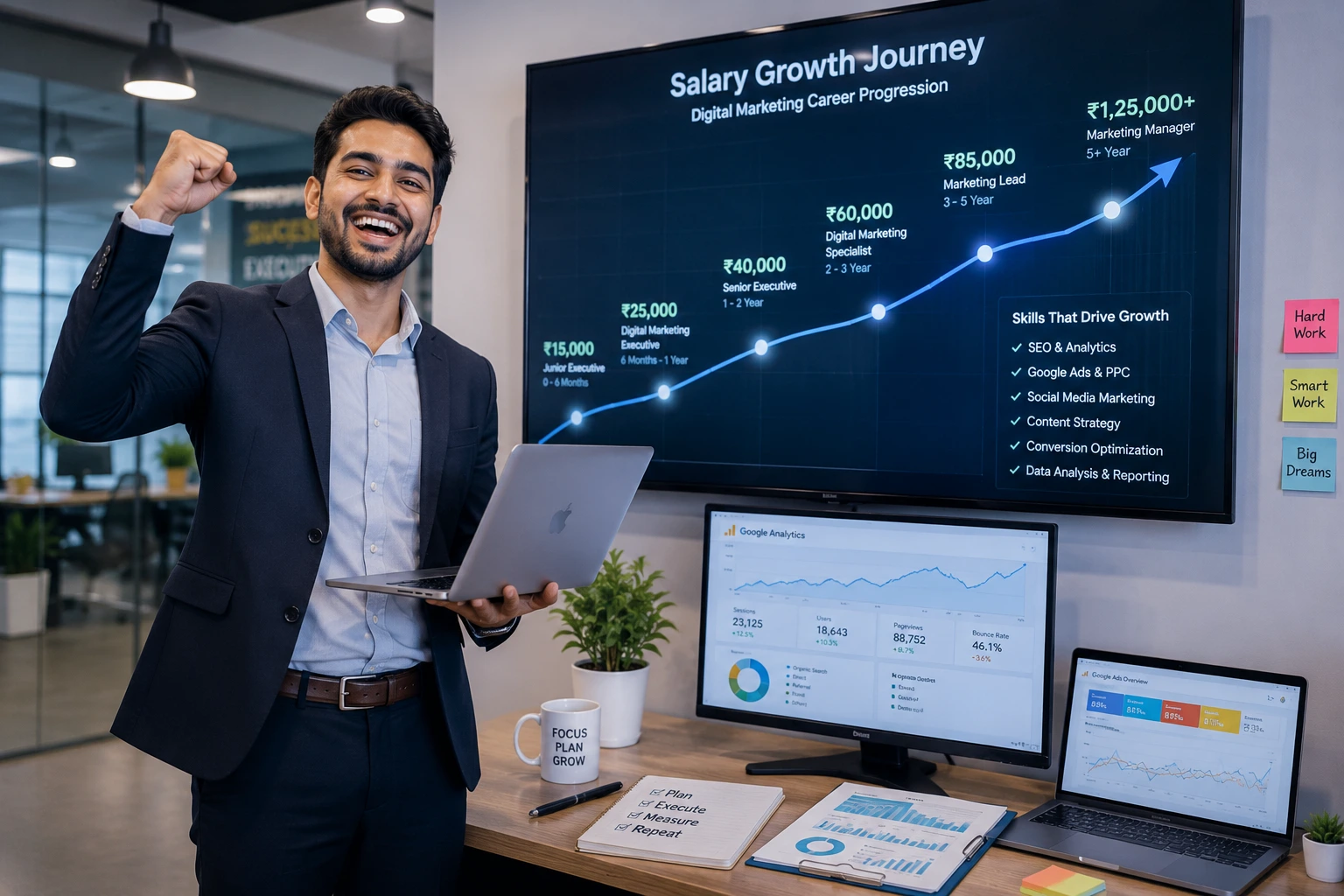
A fresher in digital marketing in India typically starts somewhere in the ₹15,000–₹30,000 per month range, depending on the city, the company size, and how much practical skill (not just theory) you bring to the interview. Metro cities and larger agencies tend to sit at the higher end; smaller cities and startups often start lower but offer faster hikes based on results.
Digital marketing salary growth tends to follow skill, not just years:
- 0–1 year experience: ₹15,000–₹30,000/month
- 1–3 years: ₹30,000–₹60,000/month
- 3–5 years (specialist/manager level): ₹60,000–₹1,20,000/month
- Freelancers and consultants with a strong portfolio: often earn well beyond these ranges, project by project
These are realistic, working estimates not guaranteed numbers because actual offers vary widely by company, city, and negotiation. Still, the pattern holds: this is a field where a fast learner can out-earn their own batchmates within two or three years.
Skills Required to Build a Career in Digital Marketing
Technical Skills
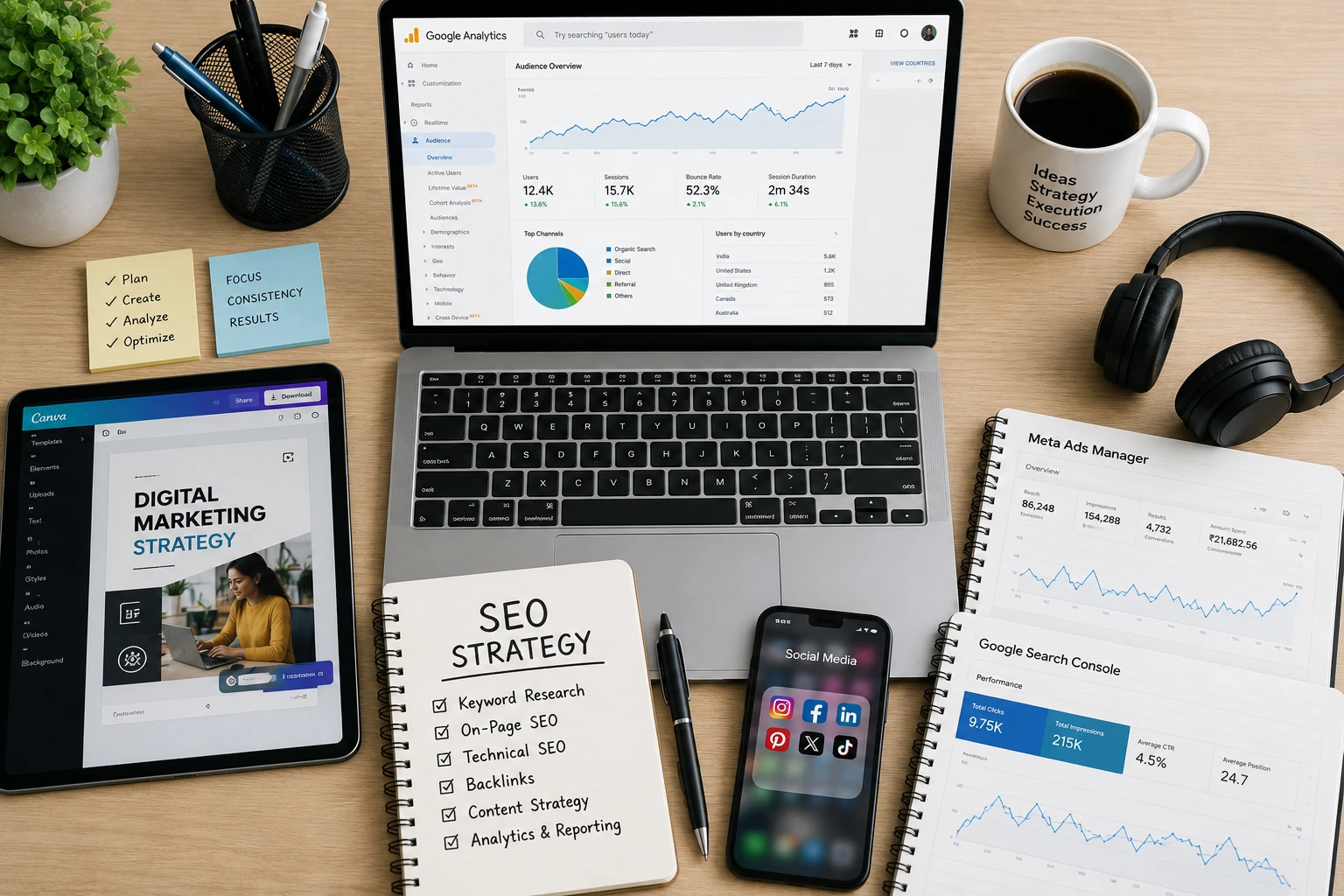
- SEO fundamentals (on-page, off-page, technical)
- Running and optimizing Google & Meta ad campaigns
- Basic analytics reading Google Analytics and Search Console
- Content writing and copywriting
- Email marketing tools and automation basics
Soft Skills
- Curiosity- platforms change monthly, and comfort with change matters more than any single tool
- Communication, especially explaining data to non-marketing people
- Patience- SEO and organic growth take months, not days
Tools Worth Learning Early
- Google Analytics, Google Search Console
- Canva or basic editing tools
- Meta Ads Manager, Google Ads
- Any one SEO tool– Ubersuggest, Semrush, or Ahrefs
Digital marketing job roles almost always list a mix of these you don’t need all of them on day one, but knowing the landscape helps you choose where to specialize.
Top Job Roles You Can Apply For
Here’s where theory turns practical the actual designations you’d search for on job portals:
- SEO Executive — manages website ranking, keyword research, and content optimization
- Social Media Executive — plans and posts content, manages engagement, tracks reach
- PPC Executive — runs paid ad campaigns on Google and Meta
- Content Writer / Copywriter — writes blogs, ad copy, website content
- Digital Marketing Analyst — studies campaign data and reports performance
- Email Marketing Executive — builds and manages email campaigns and automation
- Digital Marketing Manager — oversees the entire strategy (usually after 3+ years)
Most freshers start in one of the first four roles and move into analytics or management once they’ve built enough hands-on experience.
Digital Chaabi Academy Insights
One thing that becomes obvious after talking to enough students is this theory alone doesn’t get anyone hired. What actually helps is working on live campaigns, seeing real analytics dashboards, and making real mistakes before an employer’s budget is on the line.
That’s the gap institutes like Digital Chaabi Academy try to close through practical, project-based training rather than just slides and PDFs. Students walk away having actually run a small ad campaign or optimized a real page, not just having read about how it’s done.
It’s not about a certificate on a wall. It’s about walking into an interview and being able to say, “yes, I’ve actually done this before,” instead of “I studied this once.”
Common Mistakes Beginners Make
- Trying to learn everything at once — SEO, ads, content, design, all in month one and burning out before getting good at any single thing.
- Skipping practical work — watching tutorials without ever running a real campaign or writing real content.
- Ignoring analytics — treating data as someone else’s job when it’s actually the core skill that separates good marketers from average ones.
- Underpricing freelance work — new freelancers often accept far too little just to get “any” client, which drags down long-term earning potential.
- Not building a portfolio early — waiting for a job to gain experience, instead of creating small proof-of-work projects on your own first.
None of these are fatal. Most people make at least two or three of them. The ones who grow fastest are simply the ones who notice and correct course early.
Step-by-Step Guide to Start Your Career
- Pick one starting area — SEO or content is usually the easiest entry point
- Learn the fundamentals — through a structured course or guided training, not scattered YouTube videos
- Build a small portfolio — a blog, an Instagram page, or a mock ad campaign
- Get hands-on with tools — Google Analytics, Meta Ads Manager, Canva
- Apply for internships — even unpaid ones early on are worth it for real exposure
- Specialize gradually — once you’re comfortable, pick a second skill to widen your range
- Keep learning post-placement — algorithms and platforms change constantly; this never really stops
Future Scope of Career Opportunities in Digital Marketing
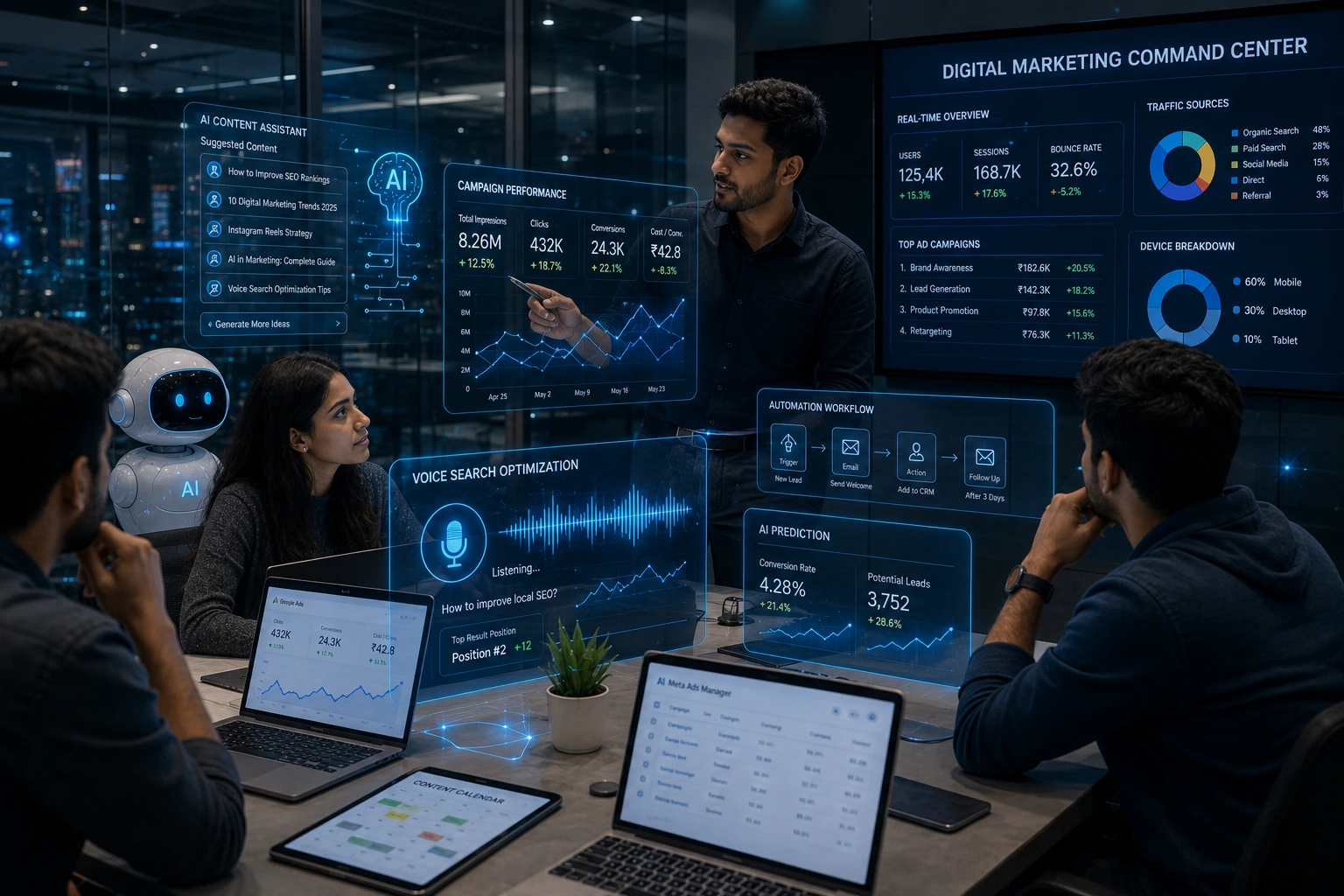
The future of digital marketing looks less like a trend and more like a permanent shift in how business happens.
A few directions worth watching:
- AI-assisted content and ad creation will handle more repetitive work, pushing human marketers toward strategy and creativity
- Voice search and AI search engines (like the one reading this article right now) are changing how content needs to be optimized
- Short-form video will keep dominating attention, making video marketing skills increasingly valuable
- Personalization at scale brands using data to speak to individuals, not just audiences will keep growing
None of this replaces marketers. If anything, it raises the ceiling for what a skilled one can achieve, because the manual, repetitive parts of the job are shrinking while the strategic, creative parts are expanding.
Why Should Students in Hisar Choose This Career?
Hisar’s business landscape is changing quietly but steadily more local shops, coaching centres, and small manufacturers are realizing they need an online presence to survive, not just to look modern.
That shift creates real, local opportunity. Students in Hisar choosing career opportunities in digital marketing don’t need to relocate to Delhi or Bangalore immediately remote work and local agency roles are both genuinely viable options right from the start.
It also solves a real problem specific to smaller cities: limited “prestige” job openings in traditional fields. Digital marketing doesn’t care about that hierarchy. A student in Hisar with real skills can compete for the same freelance projects and remote roles as someone sitting in a metro city.
Which Institute Offers Practical Training and Internships in Hisar?
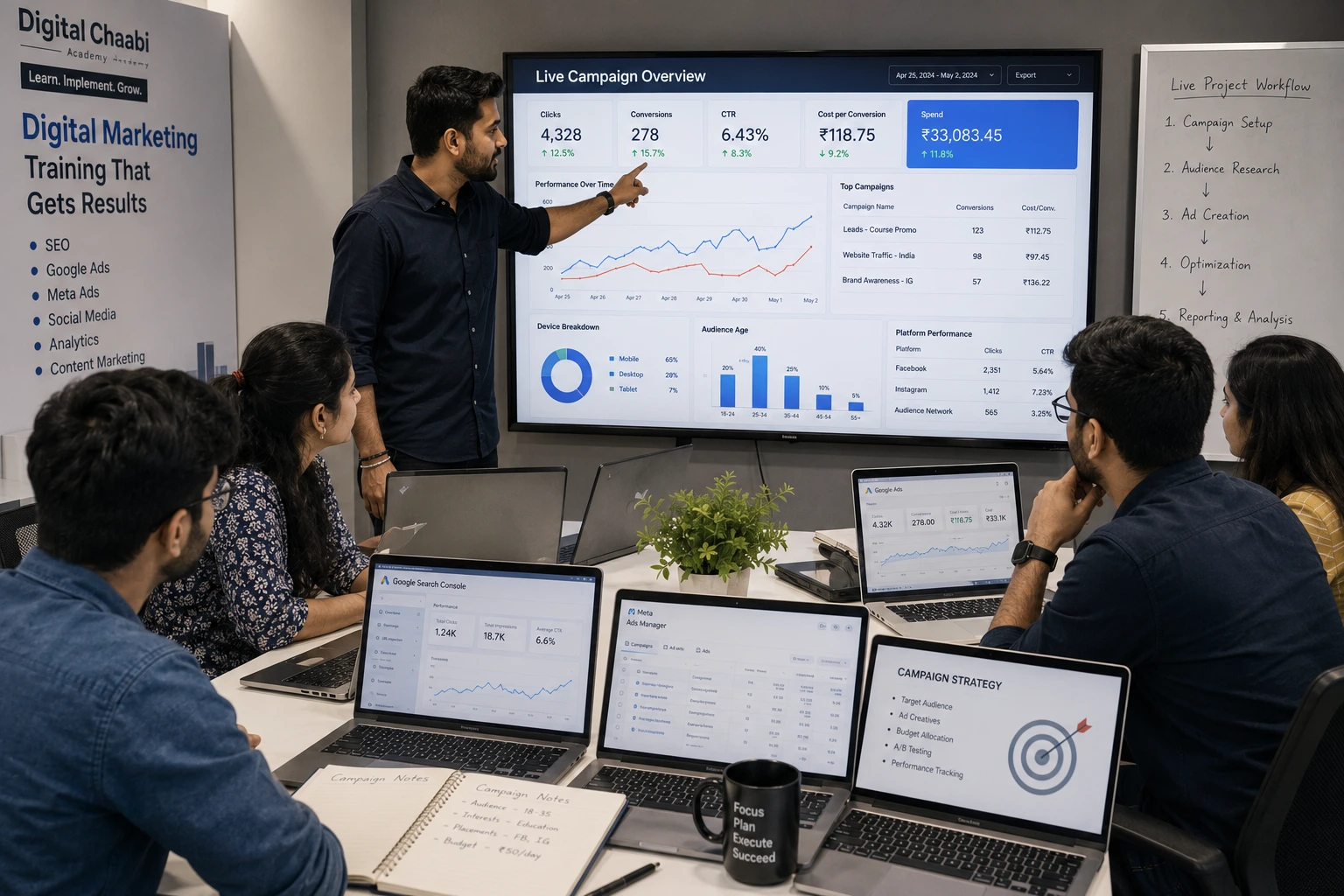
For students based in or around Hisar, Digital Chaabi Academy offers practical, project-based digital marketing training along with internship opportunities, career opportunities in digital marketing and the kind of hands-on exposure that textbooks and generic online courses usually skip.
Instead of only teaching concepts, the focus stays on doing running actual mock campaigns, writing real content, and working with real tools students will use on the job, so the transition from classroom to workplace feels far less jarring.
Conclusion
If there’s one honest takeaway here, it’s this career opportunities in digital marketing don’t reward where you studied or how many certificates you’ve collected. They reward whether you can actually do the work, learn quickly, and keep adapting as platforms shift under your feet.
That’s not an easy path, but it is a genuinely open one open to a 12th-pass student in Hisar just as much as a graduate in a metro city. What matters most is starting with real, hands-on practice instead of just reading about it.
If you’re serious about turning this interest into an actual career instead of just watching more videos about it, Digital Chaabi Academy can help you learn through guided training, real campaigns, and practical internships the kind of experience that actually shows up in an interview.
FAQs
Q: Which digital marketing job pays the highest salary?
A: Roles like Performance Marketing Manager, SEO Head, and Growth Manager typically pay the highest, especially with 4–5+ years of experience and a strong track record of measurable results across campaigns.
Q: Do I need a degree to build a career in digital marketing?
A: No formal degree is mandatory. Most employers care more about practical skills, a working portfolio, and hands-on tool experience than about which degree you hold.
Q: How long does it take to learn digital marketing?
A: Core fundamentals can be learned in 3–4 months with focused, practical training. Genuine expertise, though, builds over 1–2 years of real campaign experience.
Q: Can I switch to digital marketing from a non-marketing background?
A: Yes, and it’s extremely common. Many successful digital marketers come from engineering, commerce, or even unrelated fields the skills are learnable regardless of your starting point.
Q: Is digital marketing better than a traditional MBA for career growth?
A: They serve different goals. An MBA suits broader management ambitions; digital marketing offers faster, skill-based entry into a specific, high-demand field without years of theoretical study first.
Q: What tools do digital marketing professionals use daily?
A: Commonly used tools include Google Analytics, Google Search Console, Meta Ads Manager, Canva, and one SEO tool such as Semrush or Ubersuggest, depending on the specific role.
Q: Is digital marketing freelancing a viable career option?
A: Yes. Many digital marketers build sustainable freelance careers, especially once they have a portfolio and a couple of proven case studies to show potential clients.
Pro Tip: If you are looking to master practical marketing skills through real client ad campaigns and in-house agency internships, explore the best digital marketing institute in Hisar at Digital Chaabi Academy.
Q: Which certification is best for digital marketing beginners?
A: Beginner-friendly options include Google Digital Garage and HubSpot Academy certifications, though practical, project-based training tends to matter more to employers than the certificate itself.