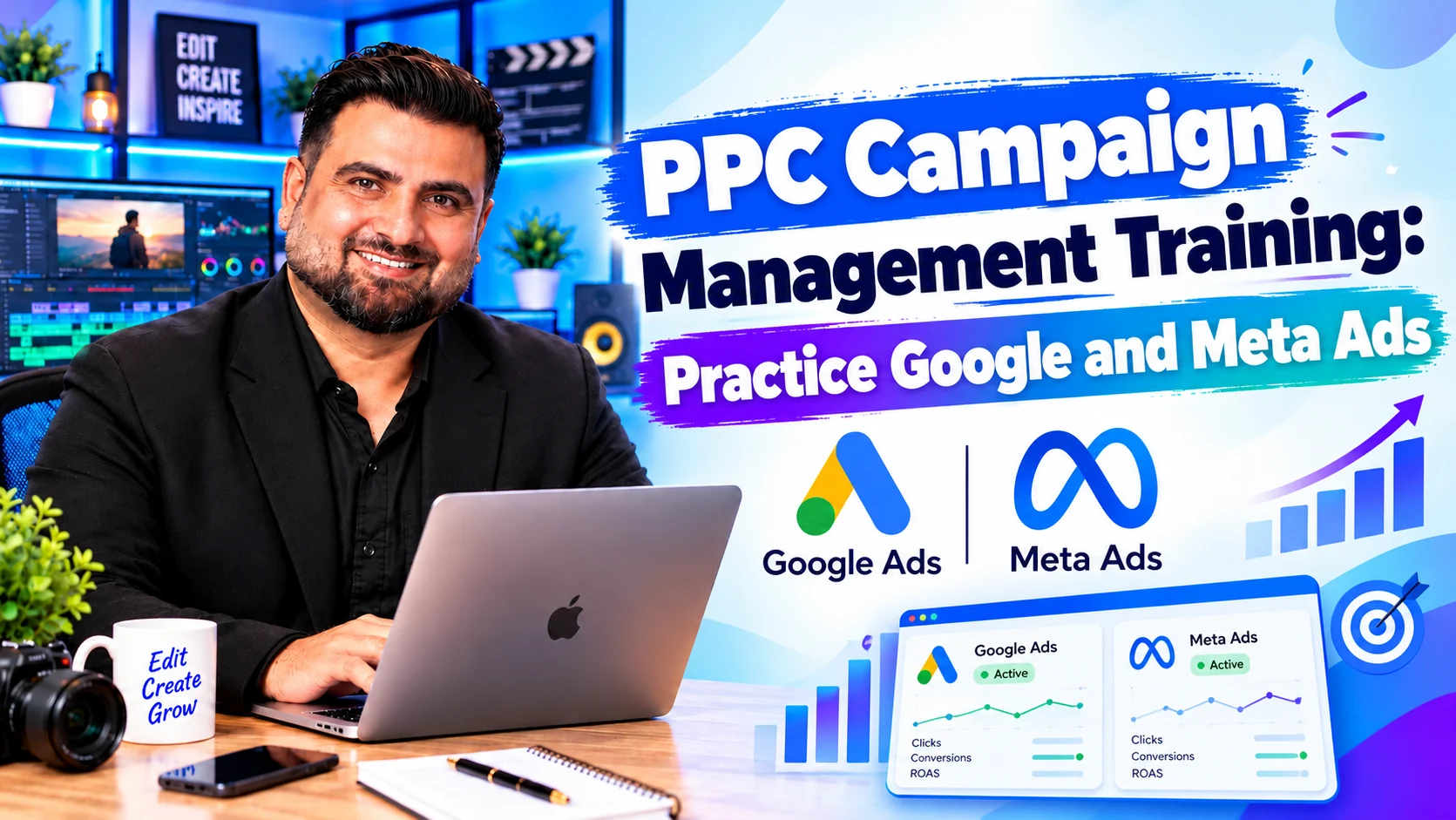
Most beginners burn their first ad budget in three days. They boost a post, pick a random audience, and wait. Clicks arrive. Sales don’t. Then comes the usual conclusion: “Ads don’t work.” Ads do work. Unplanned ads don’t. That difference is exactly what PPC Campaign Management Training is built to teach.
PPC Campaign Management Training teaches you how to plan, launch, monitor, and optimise paid campaigns on platforms like Google Ads and Meta Ads. You learn to choose the right audience, write ads that get clicks, track results, and cut wasted spend, ideally by practising on real campaigns instead of just watching demos.
This matters because every business wants customers faster, and paid ads are the quickest lever. But the person running the ads decides whether the money works or disappears.
If you’re a student, marketer, freelancer, or business owner who wants to stop guessing with budgets, this guide shows what the training covers, how long it takes, and how to start.
What Is PPC Campaign Management Training?
PPC stands for pay-per-click. You pay a platform only when someone clicks your ad. Sounds simple. Managing it well is not.
PPC Campaign Management Training is a structured programme where you learn to run paid campaigns from start to finish. You begin with how ad platforms work, move into setting up campaigns, and end with reading data and improving results.
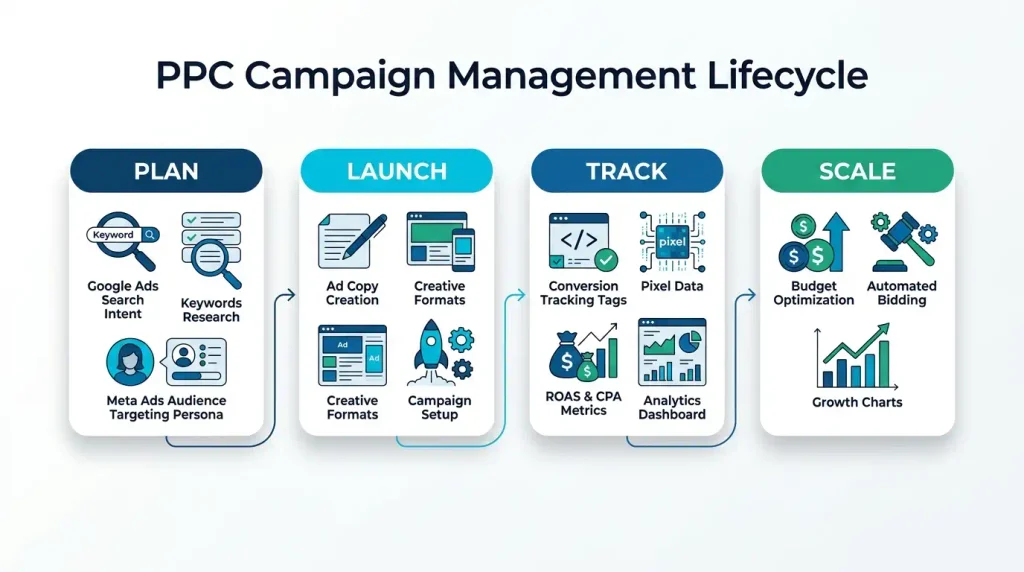
A good programme usually covers:
- How Google Ads and Meta Ads work
- Keyword research and audience targeting
- Writing ads and designing creatives
- Budgets, bidding, and campaign structure
- Conversion tracking and reporting
- Optimisation and scaling
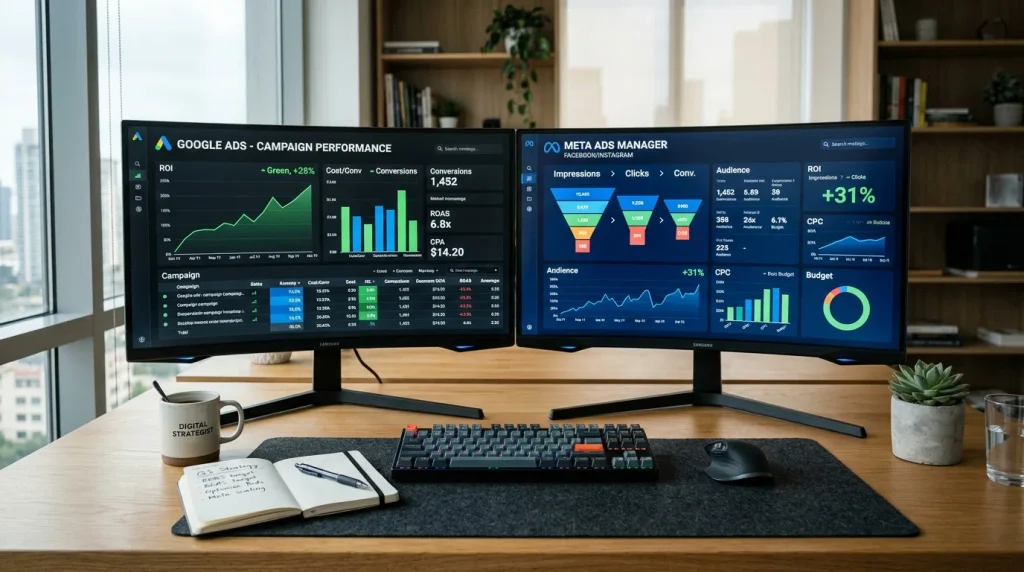
Think of it like driving. Knowing where the accelerator is doesn’t make you a driver. You need practice on actual roads, with traffic, turns, and surprises.
That’s the idea behind good PPC Campaign Management Training. You don’t just learn the buttons. You learn to make decisions with money on the line.
The good news is you don’t need a marketing degree. You need curiosity, patience, and a willingness to test things and read numbers.
Why This Skill Pays Off
Every local business wants more enquiries. Most don’t have the time or know-how to manage ads themselves.
That’s the gap. Here’s why people choose this skill:
- Constant demand. Clinics, shops, coaching centres, and online brands all run ads.
- Measurable work. Ads show clear numbers, so your results speak for themselves.
- Multiple paths. Freelancing, agency roles, in-house marketing, or running ads for your own business.
- Recurring work. Campaigns need monthly management, which means repeat clients.
Picture a local dental clinic that wants more appointment calls. A trained person can set up a search campaign, a location target, and a call button. Then they track which ads bring real enquiries.
That’s the kind of work PPC Campaign Management Training prepares you for. To be clear, no course can promise income or guaranteed results. What it can do is give you a skill that businesses already spend money on.
Want to know how campaigns are actually managed? Ask for a live campaign walkthrough before joining any PPC Campaign Management Training programme.
What Does PPC Campaign Management Training Teach?
Before paying for any course, ask one question: will I manage real campaigns, or just watch someone else do it?
A complete PPC Campaign Management Training programme should teach these things:
- Platform basics: how Google Ads and Meta Ads are structured, from account to campaign to ad.
- Search campaigns: keyword research, match types, negative keywords, and ad copy.
- Meta campaigns: audience targeting, creatives, placements, and objectives.
- Budgeting and bidding: how to spend carefully and when to increase spend.
- Landing pages: why a good ad fails on a bad page.
- Conversion tracking: knowing which clicks became calls, leads, or sales.
- Optimisation: pausing weak ads, scaling strong ones, and testing new ideas.
- Reporting: explaining results to a client in plain language.
The tracking module is the one most beginners underestimate. Without it, you’re guessing. With it, every rupee has a story.
A strong programme also gives you a budget or a sandbox to practise on. Concepts stick when a mistake actually costs something, even a small amount.
PPC Campaign Management Training at a Glance: Platforms, Skills and Outcomes
Short on time? Here’s the quick view.
- Best for: beginners, students, freelancers, marketers, and business owners.
- Platforms covered: Google Ads (Search, Display, YouTube) and Meta Ads (Facebook and Instagram).
- Skills learned: keyword research, audience targeting, ad writing, bidding, tracking, optimisation, and reporting.
- Typical duration: around 4 to 8 weeks for beginners, depending on practice hours.
- Prerequisites: basic computer skills and comfort with numbers.
- Outcome: managed practice campaigns and a reporting sample for your portfolio.
When you compare any PPC Campaign Management Training option, check five things. Do you run real campaigns? Does it cover both Google and Meta? Is tracking taught properly? Do you get feedback on your campaigns? Do you finish with a report you can show clients?
If two or more answers are no, keep looking.
How to Learn Google Ads and Meta Ads?
Start with the basics of each platform, then run small practice campaigns with a limited budget. Learn keyword targeting for Google Ads and audience targeting for Meta Ads, track results, and improve weekly. Guided training with feedback speeds this up considerably.
Here’s a simple path:
- Learn how each platform works. Google Ads captures people already searching. Meta Ads finds people who might be interested.
- Open a practice account. Explore every menu without fear.
- Run a tiny search campaign. Use a small budget and a clear goal, like calls or form fills.
- Run a tiny Meta campaign. Test one audience and two creatives.
- Install tracking. Know what each click leads to.
- Review weekly. Pause what wastes money. Keep what works.
- Write a report. Summarise spend, results, and your next steps.
Notice the pattern: small budget, clear goal, regular review. That’s the habit professionals build, and it’s exactly what structured PPC Campaign Management Training repeats until it becomes automatic.
You can learn alone using free resources. The trouble is not knowing what you’re doing wrong. Feedback from an experienced person catches those mistakes early, before they get expensive.
What Is PPC Campaign Management?
PPC campaign management is the ongoing work of planning, launching, monitoring, and improving paid ad campaigns. It includes choosing keywords or audiences, setting budgets, writing ads, tracking conversions, and optimising performance so that ad spend produces more leads or sales.
In simple words, it’s not “set and forget.” It’s “set, watch, and improve.”
A typical week for someone managing campaigns might look like this:
- Check spend against budget
- Review which keywords or audiences are performing
- Add negative keywords to block wasted clicks
- Refresh ad creatives that have gone stale
- Test a new headline or offer
- Send a short update to the client
Good campaign management is mostly small, regular decisions. Nothing dramatic. But those small decisions add up to better results over time.
That’s why PPC Campaign Management Training puts so much weight on practice. You can’t learn judgment from a lecture. You learn it by watching real numbers move.
Ready to practise on real campaigns? Pick a PPC Campaign Management Training programme where you manage live ads, not just slides.
Skills You Build in PPC Campaign Management Training
Platforms change their menus often. Skills are what you keep.
Research and Targeting
You learn to find the keywords people actually type and the audiences who might actually care. Good targeting saves more money than any clever ad copy.
Ad Writing and Creative Thinking
A strong ad does three things: it grabs attention, it makes a clear promise, and it asks for one action. You practise writing headlines, descriptions, and creative briefs that do exactly that.
Tracking and Analytics
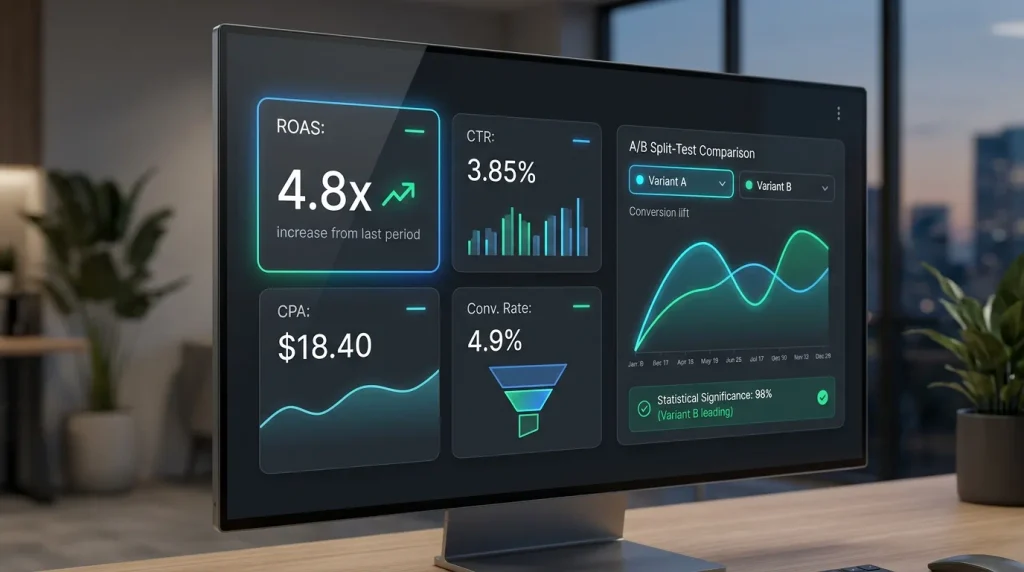
You set up conversion tracking so you know what’s working. Then you learn to read the numbers: cost per click, conversion rate, cost per lead, and return on ad spend.
Optimisation and Decision-Making
This is where beginners become professionals. You decide what to pause, what to scale, and what to test next.
At Digital Chaabi Academy, this part is taught by having learners manage practice campaigns and review the numbers with a mentor, which is what turns theory into judgment.
Reporting and Communication
Clients don’t want a screenshot of the dashboard. They want to know what happened, why, and what comes next. You learn to explain it clearly.
The best PPC Campaign Management Training programmes blend all five, because clients never hire you for just one.
Where You Can Use These Skills
Skills matter only when they turn into work. Here’s where they do:
- Freelancing: manage ads for local businesses and startups.
- Agency roles: performance marketing executive, PPC specialist, or paid media assistant.
- In-house roles: run ads for a single brand or company.
- E-commerce: drive product sales through Google Shopping and Meta catalogue ads.
- Lead generation: clinics, real estate, education, and services all depend on enquiries.
- Your own business: stop paying someone else to guess with your budget.
Take a small online store with a limited monthly ad budget. Every wasted click hurts. After PPC Campaign Management Training, you can structure the account carefully, track what sells, and move the budget towards what actually works.
Common Mistakes Beginners Make
Most beginners don’t fail because ads are hard. They fail because of these habits:
- Boosting posts instead of building campaigns. A boost is a shortcut. It rarely gives you control.
- Skipping conversion tracking. Without it, you’re optimising for clicks, not results.
- Targeting too broadly. A wide audience burns budget on people who’ll never buy.
- Changing too much too fast. Edit one thing at a time, or you won’t know what worked.
- Ignoring the landing page. A great ad leading to a confusing page wastes money.
- Giving up too early, or waiting too long. Judge on enough data, but don’t keep funding a clear loser.
- Choosing theory-only learning. PPC Campaign Management Training without live campaigns leaves you with vocabulary but no judgment.
Fix these early and you’ll be ahead of most people starting out.
Step-by-Step Roadmap to Start PPC Campaign Management Training
Here’s a simple path. No fluff.
- Pick your goal. Freelancing, a job, or growing your own business.
- Learn the funnel. Understand how a stranger becomes a customer.
- Master one platform first. Start with Google Ads Search or Meta Ads, not both at once.
- Run a small test campaign. Keep the budget modest and the goal clear.
- Set up tracking. Calls, forms, or purchases, whichever fits.
- Review and improve weekly. Document what you changed and why.
- Add the second platform. Now compare how each behaves.
- Build a case study. Show the goal, the steps, and the result.
Follow the order. Practice beats speed.
Does Google Offer Free Training on Google Ads?
Yes. Google offers free learning resources for Google Ads, including Skillshop courses and certifications. They’re useful for understanding how the platform works, but they focus on Google’s own tools. They don’t replace hands-on practice or training that covers Meta Ads and real campaign decisions.
This is worth knowing, and worth using. Free resources are a smart starting point.
Where they fall short:
- They teach the platform, not the business judgment behind spending money.
- They don’t review your campaigns or tell you what you’re doing wrong.
- They don’t cover Meta Ads in the same depth.
So the best approach is a mix. Use free material to learn the basics, then add structured PPC Campaign Management Training to practise on real campaigns with feedback.
Future Scope
Ad platforms are getting more automated. Smart bidding, automated audiences, and AI-generated creatives are everywhere.
That doesn’t make the human obsolete. It changes the job. Platforms handle the repetitive parts, while people decide strategy, creatives, offers, and tracking.
The people who’ll do well are those who understand what the automation is doing and can step in when it goes wrong.
Stack this skill with landing page design, conversion tracking, or SEO and you can manage a project from first click to final sale. PPC Campaign Management Training is a strong base for building those extra skills.
FAQs
Q: What is PPC in Google Ads?
A: PPC means pay-per-click. In Google Ads, you bid to show your ad when people search for certain keywords, and you pay only when someone clicks. It’s a way to reach customers actively searching for what you offer. PPC Campaign Management Training teaches you to run this efficiently.
Q: Does Google offer free training on Google Ads?
A: Yes. Google Skillshop provides free courses and certification exams for Google Ads. They explain the platform well, but focus mainly on Google’s tools. For hands-on campaign practice, feedback, and Meta Ads coverage, many learners add structured PPC Campaign Management Training on top.
Q: Do I need a big budget to start PPC Campaign Management Training?
A: No. You can practise with a small budget, as long as your goals are clear and your tracking works. Small tests teach plenty. Many programmes also give you practice campaigns or sandbox accounts, so you can learn the process without risking much money.
Q: How long does PPC Campaign Management Training take?
A: Most beginners need around 4 to 8 weeks with regular practice. The exact time depends on how many campaigns you run and how often you review results. Rushing through platforms without live practice leaves gaps, so focus on finishing real campaigns.
Q: Should I learn Google Ads or Meta Ads first?
A: It depends on your goal. Google Ads works well when people are actively searching, such as clinics or local services. Meta Ads suits discovery and visual products. Many learners start with one, build confidence, then add the other within the same PPC Campaign Management Training journey.
Q: Can I earn after completing PPC Campaign Management Training?
A: Many people use this skill for freelancing, agency jobs, or running ads for their own business. Results depend on your portfolio, your pitching, and consistency. There are no guarantees, but case studies with clear numbers give you a real advantage with clients.
Conclusion
Ad budgets don’t disappear because ads are broken. They disappear because nobody is steering them.
The path is simple. Learn how the platforms work, run small real campaigns, track every result, and improve week after week. That’s what separates people who “tried ads” from people who get hired to manage them.
If you want that outcome, choose PPC Campaign Management Training that lets you launch, track, and optimise campaigns yourself. Skip the one that only shows dashboards.
Ready to Run Real Google and Meta Campaigns?
If you’re serious about managing ad budgets properly instead of just watching tutorials, PPC Campaign Management Training at Digital Chaabi Academy lets you practise Google and Meta Ads on real campaigns, with mentor feedback and reporting you can show to clients. Start your next batch and learn to make every ad rupee count.