
A logo is not a brand. Clients pay for the difference.
Anyone can draw a shape and add a name. But a business owner doesn’t just need a logo. They need a look, a voice, and a system that makes every post, bill, and board feel like it comes from the same company.
Brand Identity Design Training teaches you how to build that system. You learn to research a business, design a logo, choose colours and fonts, and package everything into a brand kit that a team can actually use. The best programmes make you do this for real businesses, so you finish with a portfolio, not just practice files.
This matters because every new shop, clinic, café, and online brand starts with the same problem: they look like everyone else. Someone has to fix that.
If you’re a designer, student, freelancer, or business owner who wants to move from “making logos” to “building brands”, this guide shows what the training covers, how long it takes, and how to start.
What Is Brand Identity Design Training?
Think of a brand as a person. The logo is the face. The colours and fonts are the clothes. The tone of voice is how it speaks. A good identity makes all of these feel like one personality.
Brand Identity Design Training is a structured programme where you learn to create that personality visually. You start with understanding the business, move into logo design and colour systems, and finish with a complete brand kit.
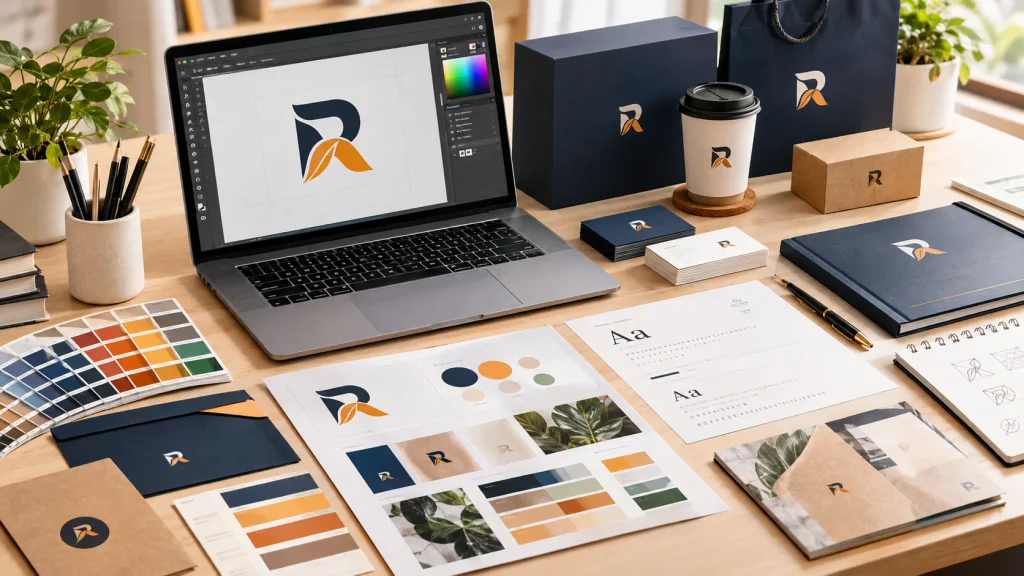
A good programme usually covers:
- Brand research and positioning
- Logo design and variations
- Colour palettes and typography
- Visual style, icons, and patterns
- Brand guidelines and usage rules
- Mockups and presentation
Most basic design courses stop at the logo. Brand Identity Design Training goes further, because a logo alone breaks the moment someone uses it on a poster, a packaging box, or a social media banner.
The good news? You don’t need to be a natural artist. You need good taste, a clear process, and a willingness to take feedback.
Why This Skill Pays Off
Ask any small business owner what they spent on their first logo. Then ask if it still looks consistent on their packaging, website, and Instagram. Usually, it doesn’t.
That’s the gap. Here’s why people choose this skill:
- Every business needs it. New ventures launch daily, and each one needs an identity.
- It’s more than a logo. Brand kits, social templates, and guidelines are separate, billable deliverables.
- It builds trust. Clients notice when a designer thinks in systems, not just shapes.
- It leads to bigger work. Packaging, websites, and campaigns all grow from a strong identity.
Picture a home bakery that wants to sell online. A trained person designs the logo, picks a warm colour palette, selects two fonts, and creates label and social templates. Suddenly the bakery looks like a real brand.
That’s the kind of project Brand Identity Design Training prepares you for. To be clear, no course can promise income. What it can do is give you a skill that businesses already pay for.
Want to see what a finished brand kit looks like? Ask for sample brand guidelines before joining any Brand Identity Design Training programme.
What Does Brand Identity Design Training Cover?
Before paying for any course, ask one question: will I design a full identity, or only a logo?
A complete Brand Identity Design Training programme should cover these modules:
- Brand discovery: asking the right questions about the business, audience, and competitors.
- Logo design: sketching ideas, choosing a direction, and refining it.
- Logo variations: horizontal, stacked, icon-only, and one-colour versions.
- Colour systems: primary and secondary palettes, and how colours work together.
- Typography: choosing fonts for headings, body text, and special use.
- Visual language: icons, patterns, photography style, and layout rules.
- Brand guidelines: a document that explains how to use everything correctly.
- Presentation: mockups on cards, packaging, signage, and social posts.
The discovery module is the one beginners skip, and it’s the one that separates professionals from amateurs. A design without a reason is just decoration.
A strong programme also makes you present your work and handle feedback. Selling your design is part of the skill.
Brand Identity Design Training at a Glance: Logo, Brand Kit and Portfolio
Short on time? Here’s the quick view.
- Best for: beginner designers, students, freelancers, marketers, and business owners.
- Skills learned: brand research, logo design, colour and typography, brand guidelines, and presentation.
- Tools used: a vector design tool such as Adobe Illustrator, Figma, or Canva for presentation and mockups.
- Deliverables: a logo set, a colour and font system, a brand guidelines document, and mockups.
- Typical duration: around 4 to 8 weeks for beginners, depending on practice hours.
- Prerequisites: basic computer skills and an interest in design.
When you compare any Brand Identity Design Training option, ask four things. Do you build complete brand kits? Do you work on real business briefs? Do you get feedback on your designs? Do you finish with a portfolio?
If two answers are no, keep looking.
What Is Brand Identity Design?
Brand identity design is the process of creating the visual elements that represent a business, including its logo, colours, typography, imagery, and style rules. These elements work together so customers recognise the brand instantly and feel a consistent personality wherever they meet it.
In plain words, it’s everything a customer sees before they read a single word.
A brand identity usually includes:
- A primary logo and its variations
- A colour palette
- Fonts for headings and body text
- Icons, patterns, or illustration style
- Rules for spacing and usage
- Templates for common materials
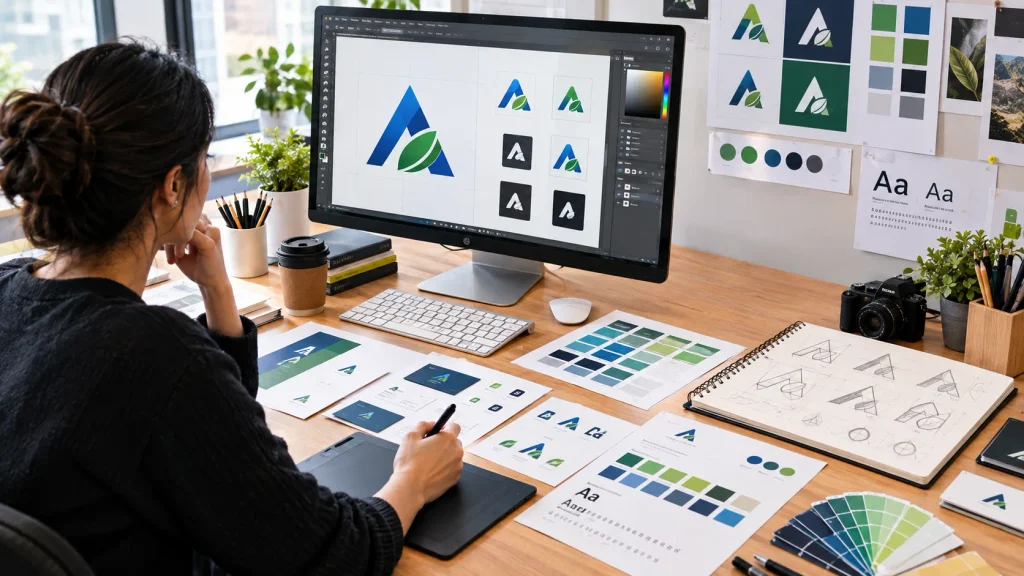
Notice what’s missing from the list: personal taste. A professional identity is built around the business and its audience, not around what the designer likes.
That’s why Brand Identity Design Training teaches research and positioning first. Beautiful work that doesn’t fit the customer still fails.
Want to build identities that clients keep using? Choose Brand Identity Design Training that makes you deliver full brand kits, not just logo files.
What Are the 7 Pillars of Branding?
There is no single official list, but a commonly used framework includes purpose, positioning, personality, voice, visual identity, consistency, and customer experience. Together they describe what a brand stands for, who it serves, how it sounds, how it looks, and how it behaves.
Here’s a simple way to understand each:
- Purpose: why the business exists beyond making money.
- Positioning: where it sits in the market compared to others.
- Personality: the human traits it would have, such as friendly, bold, or calm.
- Voice: the way it speaks in words.
- Visual identity: logo, colours, fonts, and imagery.
- Consistency: showing up the same way everywhere.
- Customer experience: how it feels to buy from and deal with the brand.
As a designer, you mostly shape the fifth pillar. But strong work needs you to understand the other six, because visuals should express them.
This is where good Brand Identity Design Training pays off. It teaches you to translate abstract ideas, like “trustworthy” or “playful”, into colours, shapes, and type that customers can feel.
Skills You Build in Brand Identity Design Training
Tools change every year. Skills stay with you.
Research and Strategy Skills
You learn to interview a client, study competitors, and define who the brand is for. This step guides every design decision that follows.
Logo and Visual Design Skills
You practise sketching, simplifying, and refining. A good logo works small on a phone screen and large on a signboard.
Colour and Typography Skills
You learn how colour sets mood, how fonts carry personality, and how to build a palette that works on screen and in print.
System Thinking
This is where beginners become professionals. You design rules so anyone can use the brand correctly without calling you every time.
Presentation and Communication
Clients buy what they understand. You learn to explain the reasoning behind your design and handle feedback calmly.
The best Brand Identity Design Training programmes blend all five, because clients never hire you for just one.

Where You Can Use These Skills
Skills matter only when they turn into work. Here’s where they do:
- Freelancing: logo and brand kit packages for startups and small businesses.
- Agency roles: brand designer, graphic designer, or creative executive.
- In-house roles: maintain and grow a single company’s identity.
- Packaging and labels: product brands need consistent visual systems.
- Social media branding: templates and style guides for consistent posting.
- Your own business: build an identity you don’t need to outsource.
At Digital Chaabi Academy, learners practise this by building complete brand kits for sample businesses and reviewing them with mentors, which gives them real portfolio pieces to show.
Take a new skincare brand that needs packaging, a website, and Instagram templates. After Brand Identity Design Training, you can deliver all three from one consistent system.
Common Mistakes Beginners Make
Most beginners don’t fail because design is hard. They fail because of these habits:
- Starting with the logo. Research first, visuals second.
- Copying trends blindly. What’s popular may not suit the client.
- Using too many fonts and colours. Simple systems look more professional.
- Ignoring small sizes. If the logo fails at app-icon size, it fails.
- Skipping guidelines. Without rules, clients will misuse your work.
- Never showing mockups. Clients struggle to imagine a logo in real use.
- Choosing theory-only learning. Brand Identity Design Training without real briefs leaves you with software skills but no process.
Fix these early and you’ll be ahead of most people starting out.
Step-by-Step Roadmap to Start Brand Identity Design Training
Here’s a simple path. No fluff.
- Pick your goal. Freelancing, a job, or building your own brand.
- Study great brands. Notice how they use colour, type, and consistency.
- Learn one design tool. Master the basics before exploring more.
- Practise logo sketching. Draw many ideas before touching the computer.
- Build a colour and font system. Keep it small and intentional.
- Create a mini brand kit. Logo, palette, fonts, and two sample templates.
- Add mockups. Show your work on cards, packaging, and social posts.
- Build 3 full projects. Treat each like a real client brief.
Follow the order. Thinking beats speed.
Future Scope
AI tools can now generate logo options in seconds. That sounds like a threat, but it has changed the job rather than ended it.
Anyone can generate an image. Few people can decide whether it fits a brand, build a consistent system around it, and defend the reasoning to a client.
Stack this skill with web design, social media design, or video editing and you can offer complete branding packages. Brand Identity Design Training is a strong base for building those extra skills.
FAQs
Q: What is brand identity design?
A: Brand identity design is creating the visual parts of a brand, including logo, colours, fonts, imagery, and usage rules, so a business looks consistent everywhere. Brand Identity Design Training teaches you to build these elements as a connected system rather than as separate files.
Q: What are the 5 P’s of brand identity?
A: There is no single official list, but a commonly used version includes purpose, positioning, personality, promise, and presentation. They describe why the brand exists, where it stands, how it behaves, what it guarantees, and how it looks. Designers use them to guide visual decisions.
Q: What are the 7 types of brands?
A: Different sources define this differently. A common grouping includes personal brands, product brands, service brands, corporate brands, retail brands, geographic brands, and online or digital brands. Knowing the type helps you design an identity suited to how the brand reaches customers.
Q: How long does Brand Identity Design Training take?
A: Most beginners need around 4 to 8 weeks with regular practice. The time depends on how many projects you complete and how much feedback you apply. Rushing through tools without finishing full brand kits leaves gaps, so focus on completed projects.
Q: Do I need to be good at drawing for Brand Identity Design Training?
A: No. Strong drawing helps, but identity design relies more on research, layout, colour, and typography. Many successful brand designers use shapes, type, and simple icons rather than detailed illustration. Practice and feedback improve your eye faster than natural talent.
Q: Can I earn after completing Brand Identity Design Training?
A: Many people use this skill for freelancing, agency roles, or building brands for their own business. Results depend on your portfolio, how you pitch, and consistency. There are no guarantees, but complete brand kits and clear case studies give you a real advantage.
Conclusion
A great logo gets noticed once. A great identity gets remembered every time.
The path is simple. Learn to research a business, design with a reason, build a complete system, and present it with confidence. That’s what separates people who “make logos” from people who get hired to build brands.
If you want that outcome, choose Brand Identity Design Training that makes you design, document, and present full brand kits. Skip the one that only teaches software tricks.
Ready to Build Brands Clients Remember?
If you’re serious about creating complete brand identities instead of just drawing logos, Brand Identity Design Training at Digital Chaabi Academy lets you build professional logos and brand kits on real briefs, with mentor feedback and a portfolio you can show to clients. Start your next batch and learn to design brands that last.